
ReachAPI isn’t a single endpoint. It’s a suite of capabilities designed to give developers control over how they access, filter, and deliver data.

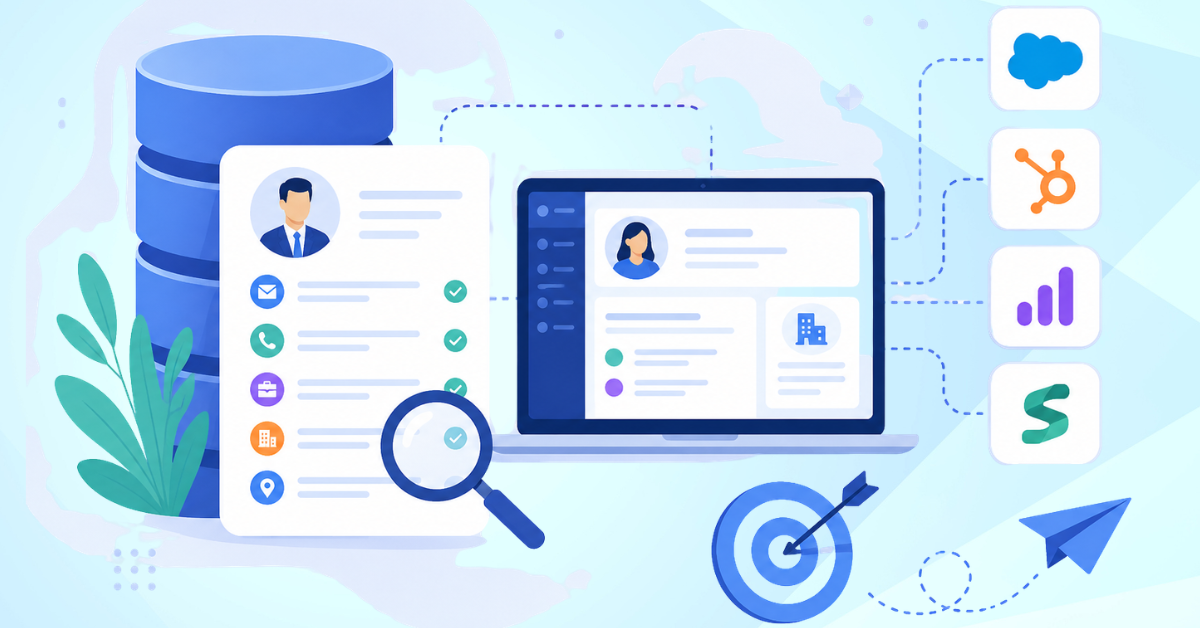
How to Evaluate B2B Data Vendors for Accuracy and Compliance
Your CRM is only as useful as the data inside it. When contact records go stale or arrive incomplete, outreach stalls—and pipeline suffers.
ReachAPI is a RESTful B2B data API that gives developers real-time access to over 150 million verified contacts and 12 million company profiles, designed to plug directly into CRMs, marketing automation platforms, and custom workflows. This guide covers what data you get, how the key endpoints work, and how to integrate ReachAPI into your outreach stack step by step.
ReachAPI is a RESTful API that gives developers real-time access to over 150 million verified B2B contact profiles and 12 million company profiles. Think of it as a data layer that plugs directly into your CRM, marketing automation platform, or custom internal tools—so your systems stay populated with accurate contact information without manual imports or CSV uploads.
So what exactly is “B2B contact data”? It’s the professional information you use to reach decision-makers at other businesses: verified email addresses, direct phone numbers, job titles, and company details like industry and employee count.
The API returns data in clean JSON format. That means your engineering team spends less time writing transformation scripts and more time building features that actually move the needle.
ReachAPI is a RESTful API that gives developers real-time access to over 150 million verified B2B contact profiles and 12 million company profiles. Think of it as a data layer that plugs directly into your CRM, marketing automation platform, or custom internal tools—so your systems stay populated with accurate contact information without manual imports or CSV uploads.
So what exactly is “B2B contact data”? It’s the professional information you use to reach decision-makers at other businesses: verified email addresses, direct phone numbers, job titles, and company details like industry and employee count.
The API returns data in clean JSON format. That means your engineering team spends less time writing transformation scripts and more time building features that actually move the needle.
Every record you pull from ReachAPI covers both the individual contact and their associated company. Email addresses are ESP-verified before delivery, and the entire database refreshes quarterly to reduce data decay.
Here’s what a typical record includes:
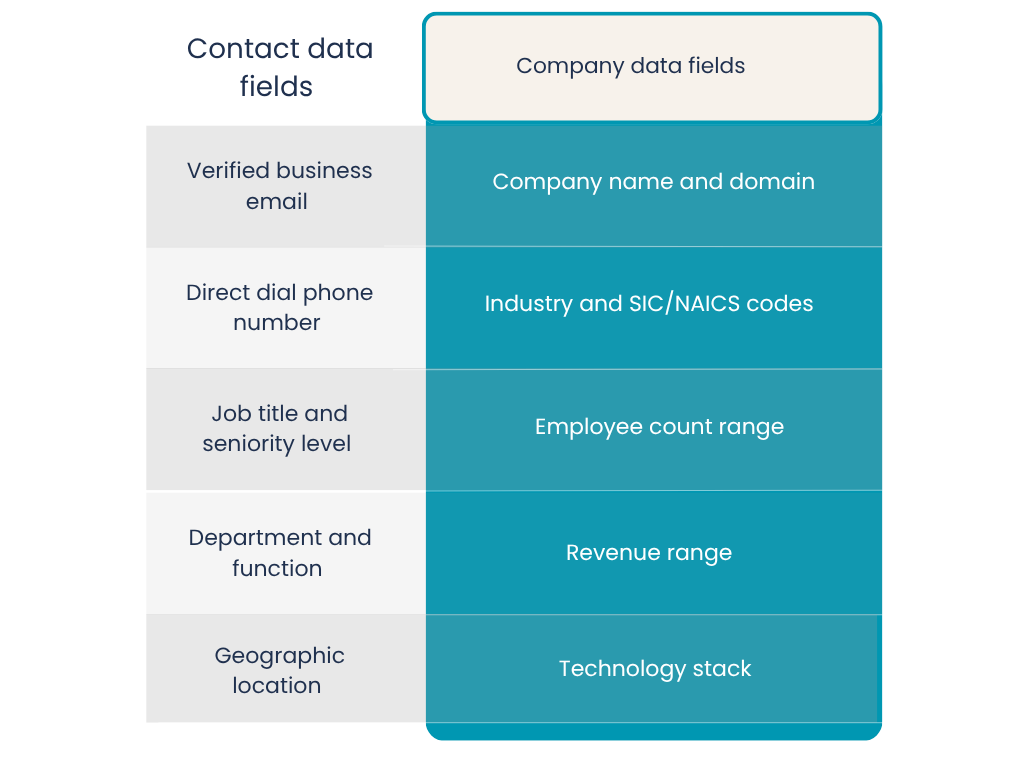
You’ll also find social profile links and standardized job levels. Filtering by “VP-level” or “Director-level” contacts in a specific industry becomes a single query parameter rather than a manual spreadsheet exercise.
ReachAPI isn’t a single endpoint. It’s a suite of capabilities designed to give developers control over how they access, filter, and deliver data.
This endpoint returns standardized filter values: industries, job titles, locations, and seniority levels. Instead of guessing valid inputs or dealing with inconsistent naming conventions, you query the Predefined Values API first and build your filters from a known set.
Before pulling thousands of records, you probably want to know how many exist. The Counts API lets you estimate available contacts matching your filters—useful for budgeting credits and scoping campaign sizes without committing resources upfront.
Upload partial records (a list of email addresses or company domains, for example), and ReachAPI returns completed profiles with verified data fields. This works well when you’re cleaning up legacy CRM data or enriching inbound form submissions.
Real-time visibility into your credit consumption and remaining balance. No surprises at the end of the month—you can monitor usage programmatically and set alerts before you hit thresholds.
You can pull data synchronously via standard API calls or configure webhooks for event-driven delivery. The webhook approach works well for workflow automation, like triggering enrichment when a new lead enters your CRM.
The practical value of any data API comes down to how easily it fits into your existing systems. ReachAPI returns clean JSON, which means most platforms can ingest it without transformation layers.
You can sync enriched contact and company data directly into CRM records. When a new lead comes in, an automated workflow queries ReachAPI, appends verified email and firmographic data, and updates the record. Your SDRs skip the manual research entirely.
Connecting ReachAPI to platforms like Marketo, Outreach, or Salesloft enables automated lead routing and campaign triggers. A prospect visits your pricing page, your system enriches their profile via API, and they’re automatically added to a targeted nurture sequence based on company size and industry.
For teams building proprietary tools, ReachAPI serves as the data layer. Sales ops teams often use it to power internal dashboards that surface account intelligence, track data freshness, and flag records that need re-verification.
Why does this matter for your pipeline? Here’s where the rubber meets the road.
ESP-verified emails mean lower bounce rates and a stronger sales pipeline. The difference between verified and unverified lists directly impacts sender reputation and deliverability—two factors that determine whether your outreach actually lands in inboxes.
ReachAPI adheres to global privacy regulations including GDPR, CCPA, CAN-SPAM, ACMA, and EDPS. For teams operating across regions or selling into regulated industries, this compliance layer removes a significant procurement hurdle.
You only pay for data you actually pull. The credit-based model means no wasted spend on records you don’t use, and the Credits Insights API gives you real-time visibility into consumption.
Minimal data cleanup required. The structured responses integrate directly into workflows, which means your engineering team spends less time on data transformation and more time on features that matter.
Minimal data cleanup required. The structured responses integrate directly into workflows, which means your engineering team spends less time on data transformation and more time on features that matter.
Getting up and running doesn’t require a lengthy implementation cycle. Here’s the typical path from signup to production.
Create a ReachStream account and navigate to Account Details under the Profile menu. Generate your unique API key there—it’s the authentication credential you’ll include in every request.
The documentation covers endpoint references, authentication guides, request/response schemas, and code examples in common languages. Spending 30 minutes here upfront saves hours of troubleshooting later.
Based on your use case, set up query parameters and filters. If you’re automating enrichment, configure webhook URLs to receive data when records are ready rather than polling repeatedly.
Connect to your CRM or sales tools and test data flow with a small batch before scaling. Verify that records populate correctly, triggers fire as expected, and your team can access the enriched data where they work.
Different teams apply ReachAPI in different ways. Here’s how it typically plays out across functions.
ReachAPI uses a credit-based pricing model. You purchase credits, and each data pull deducts from your balance based on the record type and attributes requested.
The model works well for teams with variable data needs. You’re not locked into a flat monthly fee regardless of usage—explore scalable pricing plans to find the right fit.
The model works well for teams with variable data needs. You’re not locked into a flat monthly fee regardless of usage. And because the Credits Insights API provides real-time balance visibility, you can monitor consumption and adjust as campaigns scale.
When evaluating data APIs and data enrichment tools, a few considerations tend to separate the options that work from those that create headaches.

ReachAPI was built with developers in mind—not as an afterthought bolted onto a sales tool. The documentation is comprehensive, the JSON is clean, and the credit system gives you control over costs without surprises.
Accurate B2B data is the foundation of every outbound motion—whether you’re enriching CRM records, automating lead routing, or building custom sales intelligence tools. ReachAPI delivers that data in a format developers can work with, backed by compliance certifications and a pricing model that scales with your needs.
The quarterly refresh cycle keeps records current. The ESP verification keeps bounce rates low. And the credit-based model keeps costs predictable.
ReachAPI uses API key authentication over HTTPS. Every request requires your unique key in the header, and all data transmission is encrypted.
Rate limits vary by plan tier. The Credits Insights API lets you monitor usage in real time, so you can stay within thresholds and request limit increases if needed.
The database is verified and refreshed every three months. Previously downloaded contacts also receive automatic updates at no additional cost.
ReachAPI is language-agnostic. Any language that can make HTTP requests and parse JSON works—documentation includes examples in Python, JavaScript, and cURL.
Yes. You can sign up for a free plan with no credit card required to test endpoints and evaluate data quality before committing.
ReachAPI only returns ESP-verified emails. Credits are not charged for unverified or invalid records, so you’re not paying for data that won’t reach anyone.
Marketing professional with a Master’s degree in Marketing, specializing in SEO, content strategy, social media, performance marketing, prospecting, and demand generation.
Access 200M+ verified business emails and grow your sales pipeline effortlessly.
Don't forget to share this post!















Check out our other blogs!
How Many Follow-Ups Should a Cold Email Sequence Have?

How a Medical Device Company Can Reach Hospital Decision-Makers
What Data Fields Should a Healthcare Marketing Database Include?
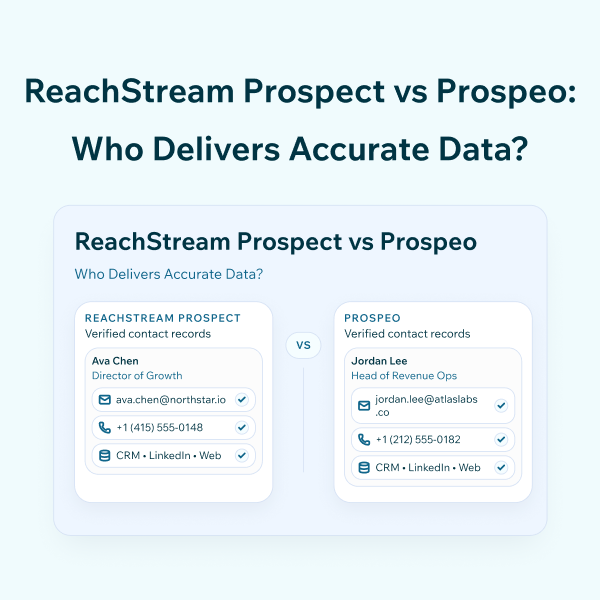
ReachStream Prospect vs Prospeo: Who Delivers Accurate Data?