

How to Evaluate B2B Data Vendors for Accuracy and Compliance

> Best Bulk Email

If you have ever watched a campaign’s bounce rate creep past 5 percent, you already know why this topic matters. Mailbox providers do not just penalize the message that bounced. They start trusting your entire sending domain less, and that distrust follows you into every inbox you try to reach afterward.
This is the quiet cost of unverified data. A list built from trade show scans, old CRM exports, or a purchased database usually looks fine on the surface. It is only after you hit send that you find out how many addresses were typos, abandoned inboxes, or spam traps. Bulk email verification software exists to catch that before it becomes your problem.
Sales professionals, SDRs, marketing teams, revenue operations, founders, recruiters, and agencies run into the same wall eventually. Lists decay, people change jobs, and email marketing only works if the emails actually exist. This guide covers what bulk email verification software does, how to evaluate one option against another, and how to pick a bulk email verification tool that fits your team.
At a basic level, bulk email verification software takes a list of addresses, checks each one against a series of tests, and returns a status for every entry. The quality of those tests is where providers separate from each other.
A capable bulk email verifier checks:
None of this replaces a real send, but it removes addresses that were never going to work. That is the value of email validation before you press send.
Run a small batch of 100 to 200 addresses through any new email validation tool before you commit your full list. It tells you how the provider handles edge cases in your specific data, like role addresses or niche domain extensions, before you spend credits on the rest.
A tool that only returns “valid” or “invalid” hides information you need. Look for providers that separate Valid, Invalid, Risky, Catch-All, Unknown, and Do Not Mail into distinct statuses, so you can decide how aggressively to mail each segment.
If your list has 40,000 rows and the platform caps uploads at 5,000, you are looking at multiple batches and a slower workflow. Check the batch upload limit and whether support responds when a large file stalls.
If your goal is simply to verify bulk emails before a campaign, the checks above are the minimum bar.
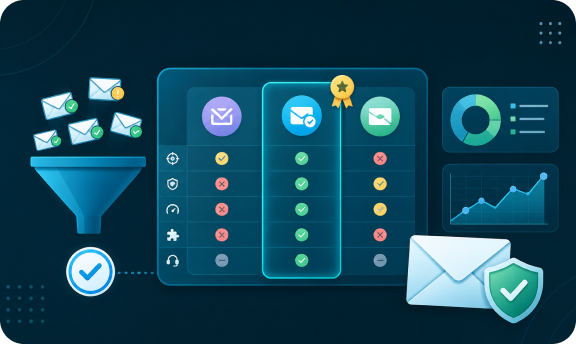
| Software | Best For | Key Verification Features | Free Trial / Plan |
|---|---|---|---|
|
ReachStream Email Verifier |
Businesses of all sizes |
SMTP verification, 5 verification statuses, catch-all detection, disposable email detection, role-based detection, Do Not Mail classification |
100 Free Credits |
|
ZeroBounce |
Deliverability-focused teams |
Email validation, blacklist monitoring, deliverability tools |
Limited free credits |
|
NeverBounce |
Sales and marketing teams |
Real-time verification, list cleaning, integrations |
Free trial |
|
Kickbox |
Developers and SaaS businesses |
Email verification, API, integrations |
Free trial |
|
Bouncer |
SMBs and growing businesses |
Bulk verification, duplicate detection, API |
Free trial |
|
Emailable |
Email marketers |
Email verification, disposable detection, integrations |
Limited free credits |
These two solve different problems, and most teams eventually need both.
Bulk list verification is for lists you already have: CRM exports, event lists, purchased data, or anything in a spreadsheet that has not been checked recently. You upload the file, the bulk email verifier processes it, and you get statuses back for the whole batch.
Real time email verification happens at the point of capture, usually through an API tied to a signup form or a CRM field, stopping a bad address before it ever enters your database.
If you mainly run outbound campaigns from purchased or aggregated lists, bulk email verification software is your priority. If you also collect emails through forms or event registration, pair it with real time checks so your list stays clean between cleanups.
Treating a one-time bulk cleanup as a permanent fix. Email list decay does not stop after you verify once. Industry estimates commonly cited in email marketing circles put natural decay at roughly 2 to 3 percent per month.
When comparing bulk email validation tools side by side, run each candidate through these four questions first.
Before signing an annual contract, run a paid test batch of 1,000 to 2,000 real addresses from your own list and compare the returned statuses against a small manual spot check. That tells you more about real-world accuracy than any vendor’s stated percentage.
Deliverability specialists widely treat bounce rates under 2 percent as a reasonable benchmark for sender reputation, while sustained rates above 5 percent can trigger throttling or blocklisting. That gap is why bulk email verification software has become a standard workflow step rather than an optional extra.
Upload a sample to ReachStream Email Verifier and see exactly how many addresses are Valid, Risky, or already dead.
Bulk email verification is no longer optional for businesses that rely on email outreach. Regularly verifying your lists helps reduce bounce rates, protect sender reputation, and improve deliverability over time.
While the right tool depends on your business needs, ReachStream Email Verifier stands out as a strong all-around choice. With 99.8% reported verification accuracy, five verification statuses, bulk uploads of up to 25,000 emails, enterprise-grade compliance, and 100 free verification credits, it offers the scalability and insights growing sales and marketing teams need to maintain high-quality contact data.
The best approach is to make email verification part of your regular workflow, not just a one-time cleanup. Clean lists today lead to better campaign performance tomorrow.
Bulk email verification software checks thousands of email addresses in a single upload to identify valid, invalid, risky, and disposable contacts. It helps improve email deliverability, reduce bounce rates, and maintain a clean, high-quality contact list.
Bulk verification processes an existing list in one batch. Real time verification checks a single address the moment it is entered, usually through a signup form or API.
Accuracy depends on the provider’s methodology. ReachStream Email Verifier is built around a 99.8 percent accuracy rate, though results vary with list age and quality.
No tool can guarantee zero bounces, since mailbox status can change between verification and send time. It significantly reduces bounce risk, but ongoing hygiene still matters.
A catch-all domain accepts mail for any address, even ones that do not exist, making it impossible to confirm a specific mailbox. Treat these as a separate, lower-confidence segment.
Verify before every major send, with a full bulk pass at least quarterly for lists not actively maintained through real time checks.
Yes. A single bad send can still damage your sender reputation for future campaigns, even if you never mail that exact list again.
It flags addresses tied to spam traps, known complainers, or other high-risk patterns that should be suppressed entirely, regardless of how the rest of the list performs.
Verification is a data hygiene practice, not a compliance certification on its own. Working with a provider that maintains GDPR and CCPA certifications matters if your list includes regulated regions.
Beyond a headline accuracy rate, look for status granularity, a batch upload limit that fits your list, documented compliance certifications, and reasonable turnaround time.
Yes. Most email list verification software, including ReachStream Email Verifier, supports simple file uploads through a dashboard, with no developer resources required.
Author

Access 200M+ verified business emails and grow your sales pipeline effortlessly.
Don't forget to share this post!















Check out our other blogs!
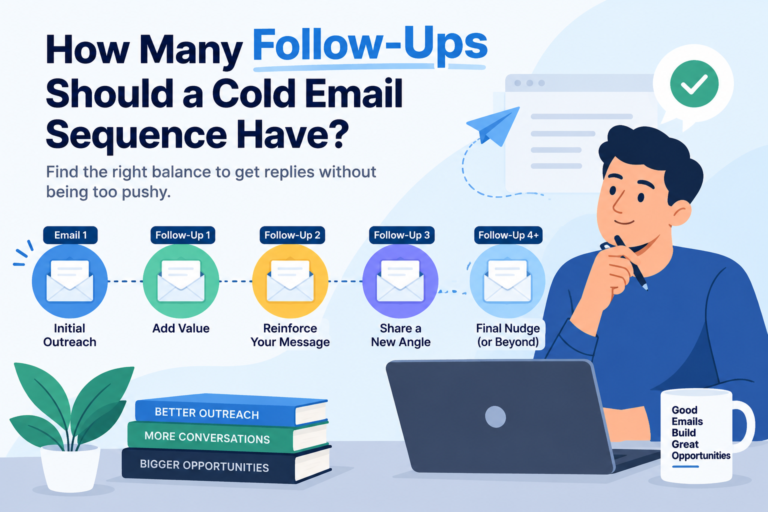
How Many Follow-Ups Should a Cold Email Sequence Have?

How a Medical Device Company Can Reach Hospital Decision-Makers
What Data Fields Should a Healthcare Marketing Database Include?
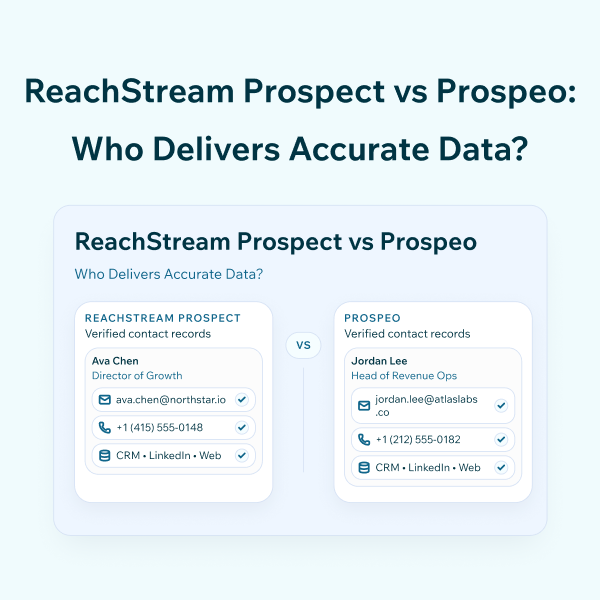
ReachStream Prospect vs Prospeo: Who Delivers Accurate Data?