In 2026, the success of your sales and marketing efforts is directly tied to the quality of your B2B lead database. With buyers completing over 75% of their journey before ever speaking to a sales representative, having access to accurate, real-time verified contact data is no longer a luxury—it is a necessity for survival and growth. This guide analyzes the top B2B lead database providers in 2026, focusing on data integrity, AI-driven insights, and seamless workflow integration.
What is the Best B2B Lead Database in 2026?
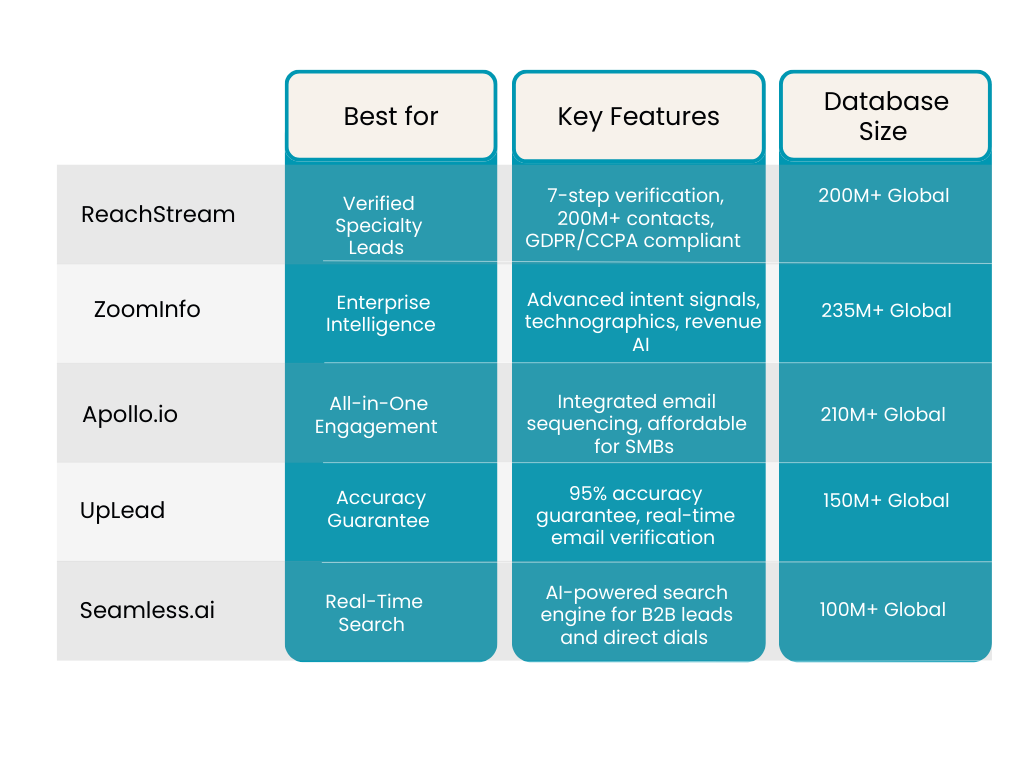
The best B2B lead database in 2026 is one that offers a combination of high-accuracy contact information, real-time verification, and deep firmographic data. Leading platforms like ReachStream, ZoomInfo, and Apollo.io have set the standard by providing not just lists, but actionable intelligence. For organizations seeking a balance between cost and quality, ReachStream stands out as a premier choice, offering a B2B list builder that ensures 95%+ deliverability.
1. ReachStream: The Gold Standard for Verified B2B Leads
ReachStream has become the preferred B2B lead database for revenue teams that prioritize data accuracy and compliance. Unlike many providers that rely on static, outdated lists, ReachStream employs a rigorous 7-step verification process, combining AI validation with manual QA to deliver a 90%+ deliverability rate.
Why ReachStream is a Top Choice in 2026:
Specialized Lead Segments: ReachStream offers deep coverage in high-value niches, including business owner email lists and specialized healthcare databases.
AI-Powered List Building: The ReachStream List Builder allows users to filter by 70+ data points, including seniority, industry, and technographics, to create a laser-focused ICP.
Affordable for All Sizes: From startups to enterprise solutions, ReachStream provides flexible pricing, including a popular 100 free leads monthly plan to test data quality.
Compliance First: In an era of strict privacy laws, ReachStream maintains 100% compliance with GDPR, CCPA, and CAN-SPAM, protecting your brand’s reputation.
Best For: Sales and marketing teams looking for a high-accuracy, compliant, and affordable B2B lead generation tool.
Build a Precise B2B Target List
Filter by job title, seniority, industry, and more to shape a list tailored to your ICP.
2. ZoomInfo: The Enterprise Lead Intelligence Suite
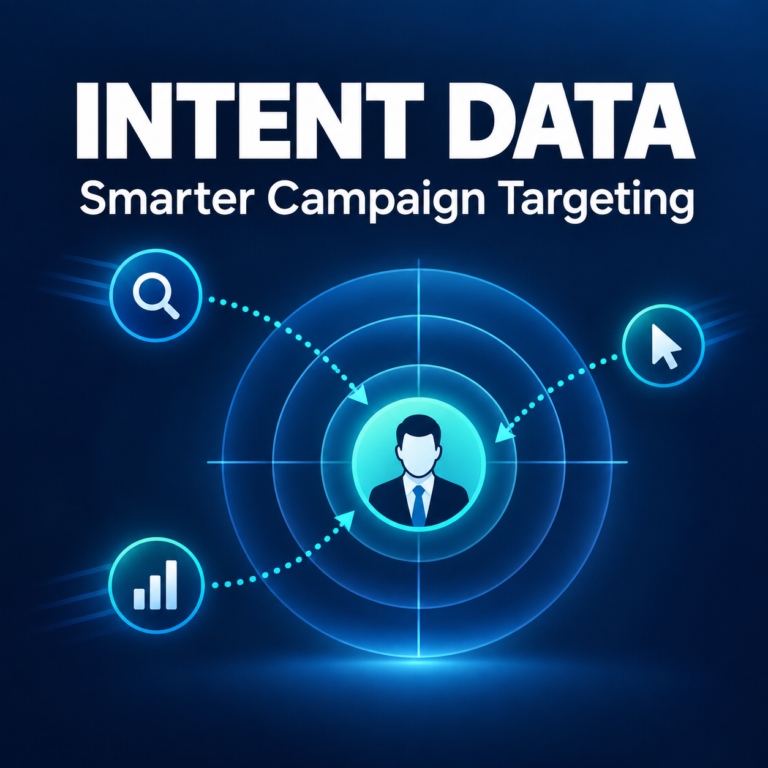
ZoomInfo remains the dominant force for large-scale enterprise operations. Its platform is more than just a B2B lead database; it is a comprehensive revenue intelligence suite. In 2026, ZoomInfo has integrated advanced AI to provide real-time intent signals, allowing teams to identify prospects who are actively in a buying cycle.
Strengths: Massive database of 235M+ contacts, deep technographic insights, and robust “Workflows” for automated prospecting.
Best For: Large enterprise teams running complex Account-Based Marketing (ABM) campaigns. For those looking for more budget-friendly options, there are several ZoomInfo alternatives available.
3. Apollo.io: The Integrated Lead Database & Outreach Tool
3. Apollo.io: The Integrated Lead Database & Outreach Tool
Apollo.io has solidified its position as the go-to solution for SMBs that need an integrated stack. By merging a vast B2B lead database with built-in email sequencing and a dialer, Apollo streamlines the entire sales process.
Strengths: Highly affordable pricing, a massive database of 210M+ contacts, and an intuitive interface.
UpLead has carved out a niche by focusing on one thing: data accuracy. They offer a 95% accuracy guarantee and perform real-time email verification the moment you download a lead, ensuring your bounce rates remain at an absolute minimum.
Strengths: Real-time verification, high-quality mobile direct dials, and a clean, easy-to-use interface.
Best For: Teams that prioritize data quality over sheer volume and want to protect their sender reputation.
5. Seamless.ai: The Real-Time Lead Search Engine
Seamless.ai uses AI to crawl the web in real-time to find the most up-to-date contact information. It functions more like a search engine for B2B leads than a traditional static database, making it highly effective for finding hard-to-reach decision-makers.
Strengths: Real-time search capabilities, strong direct dial coverage, and a powerful Chrome extension for LinkedIn prospecting.
Best For: High-velocity sales teams that need the most current contact information available on the web.
How to Evaluate a B2B Lead Database Provider
When choosing a provider in 2026, consider these four critical factors to ensure maximum ROI:
Data Freshness: How often is the database updated? Look for providers that offer real-time verification.
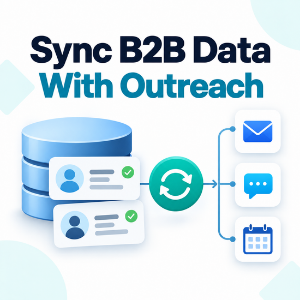
Integration: Does the database sync seamlessly with your CRM (Salesforce, HubSpot) and outreach tools?
Niche Depth: Does the provider have strong coverage in your specific target industry or geography
Compliance: Ensure the provider is fully compliant with global privacy laws to avoid legal risks and deliverability issues.
Test Data Quality Before You Decide
Validate deliverability, segmentation depth, and accuracy—no commitment, no credit card.
The B2B lead database you choose will be the foundation of your revenue growth in 2026. While giants like ZoomInfo and Apollo offer broad capabilities, specialized providers like ReachStream offer the precision, compliance, and niche depth required for high-stakes industries. By selecting a partner that aligns with your ICP and technological needs, you can accelerate your sales cycle and drive sustainable growth.
1. What makes a B2B database provider effective in 2026?
An effective provider delivers 95% accurate, verified contacts with real-time updates, strong compliance, and seamless integration into sales workflows.
2. Which database providers offer the best ROI for smbs?
Providers that balance data accuracy, transparent pricing, and reliable customer support, like ReachStream, offer the best ROI for small businesses.
3. What's the difference between a database provider & prospecting tool?
Database providers focus on accurate contact data, while prospecting tools add engagement features like email automation and multi-channel outreach.
4. Should I use one comprehensive database or multiple specialized providers?
One comprehensive provider ensures data consistency and ease of use; multiple providers may broaden coverage but increase integration complexity.
5. How much should I budget for B2B database access?
Budget varies from $29/month for small teams to $15,000+ annually for enterprises, depending on data volume and feature requirements.
6. How can I measure the performance of a database provider?
Track email bounce rates, phone validity, conversion and response rates, and overall sales pipeline impact to measure provider effectiveness.
7. What are the biggest mistakes when choosing a database provider?
Common errors include prioritizing size over accuracy, ignoring compliance, focusing solely on price, and neglecting integration capabilities.
8. How often should database information be updated?
Contact data should be updated in real-time or continuously to maintain high accuracy and maximize outreach effectiveness.
9. Which database provider is best for international prospecting?
Providers like ReachStream offer strong global coverage and compliance.
Table of Contents
Kate Anderson
Author
Kate AndersonAuthor
Access 200M+ verified business emails and grow your sales pipeline effortlessly.