
ZoomInfo is often considered the industry standard for enterprise sales organizations, particularly those focused on North American markets. The platform combines contact data with intent signals, org charts, and technographic insights.

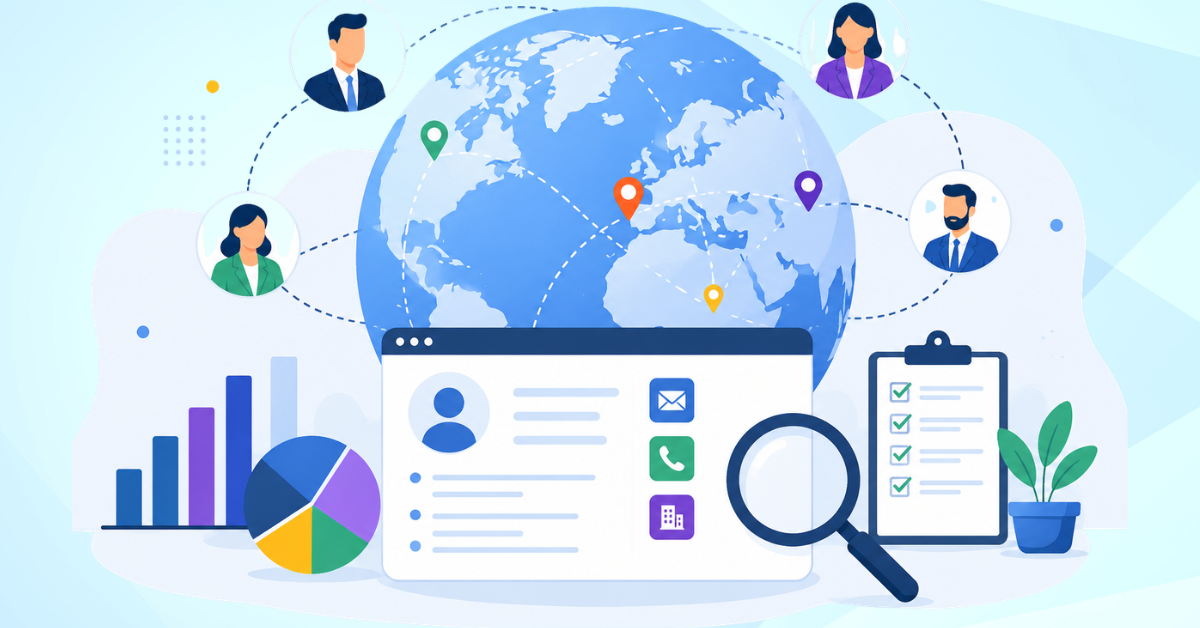
How to Evaluate B2B Data Vendors for Accuracy and Compliance
Your outreach is only as good as the data behind it. A perfectly crafted email means nothing if it bounces, and a compelling cold call script falls flat when the number connects to someone who left the company six months ago.
Global B2B contact data solves this problem by giving revenue teams verified emails, direct dials, and firmographic details for decision-makers across international markets. This guide breaks down what global B2B contact data actually includes, compares the top platforms for 2026, and walks through how to evaluate providers and activate data in your outreach workflows.
Global B2B contact data is verified business information—emails, direct dial phone numbers, job titles, and company details—spanning multiple countries and regions. Sales and marketing teams use this data to fuel prospecting, run campaigns, and enrich existing records. Top providers in 2026 include Cognism, Apollo.io, ZoomInfo, RocketReach, and Lusha, each offering large, compliant databases with coverage across North America, EMEA, and APAC.
Think of it as the foundation for international outreach. Without accurate contact information, even a perfectly crafted email or call script goes nowhere.
So what exactly makes up a global B2B contact record? Here are the core components:
One distinction worth noting: B2B contact data differs from consumer data. Consumer databases focus on individuals in their personal lives, while B2B data centers on professionals in their work roles—job titles, business emails, and company affiliations.
Why does global coverage matter? If your team sells across borders, a database covering only the United States won’t cut it. International expansion requires contacts in Europe, Asia-Pacific, Latin America, and beyond.
The business case for quality contact data is straightforward: better data leads to better outcomes.
Here’s how global B2B contact data directly impacts outreach results:
The flip side is equally true. Poor data quality shows up in wasted outreach, missed opportunities, and damaged sender reputation. Every bounced email and wrong number represents time and money lost.

ReachStream is a B2B data platform offering 200M+ verified contacts across 150+ countries, with data enrichment, a Chrome extension for LinkedIn prospecting, and API workflow integration. The platform operates on a pay-only-for-verified-emails model, meaning you don’t spend credits on contacts that can’t be reached.
ZoomInfo is often considered the industry standard for enterprise sales organizations, particularly those focused on North American markets. The platform combines contact data with intent signals, org charts, and technographic insights.
Apollo.io combines a contact database with built-in email sequencing, making it popular among startups and SMBs that want prospecting and outreach in a single tool. The platform offers a generous free tier.
Cognism has built its reputation on EMEA coverage and GDPR compliance. Their “Diamond Data” feature provides phone-verified mobile numbers, which is particularly valuable for cold calling campaigns.
Lusha offers a lightweight prospecting tool designed for quick contact lookups rather than large-scale list building. The browser extension makes it easy to reveal contact details while browsing LinkedIn.
Clearbit, now part of HubSpot as Breeze Intelligence, focuses on real-time enrichment and website visitor identification. It’s particularly strong for inbound-focused marketing teams already using HubSpot.
UpLead positions itself as a budget-friendly alternative with real-time email verification built into the platform. You can verify emails before downloading, reducing wasted credits.
Seamless.AI operates as a real-time search engine that finds contacts on demand rather than pulling from a static database. This approach can surface fresh data but requires more active searching.
Lead411 offers an unlimited-access model on select plans, which appeals to high-volume prospecting teams. The platform also includes Bombora intent data and trigger alerts for timely outreach.
RocketReach provides broad coverage with 700M+ profiles and 60M+ company records. The platform is popular among both sales and recruiting teams for professional contact lookups.
Hunter.io focuses specifically on email—finding email addresses and verifying them. It’s a focused tool rather than a full-featured B2B database.
Choosing the right platform involves more than comparing database sizes. Here’s what to examine before committing.
Not all verification is created equal. Some platforms rely solely on algorithmic checks, while others combine AI with human verification or ESP-level validation. ESP validation means the platform actually pings email servers to confirm addresses are deliverable.
When evaluating vendors, ask about stated accuracy rates and whether they offer bounce guarantees. A platform claiming 95% accuracy with a bounce replacement policy gives you more confidence than one with vague quality claims.
Coverage varies dramatically by region and seniority level. A platform might have millions of contacts in the US but sparse coverage in Southeast Asia or Latin America.
Before committing, test the platform against your specific ICP (Ideal Customer Profile). Search for the exact titles, industries, and geographies you target. The results will tell you more than any marketing claim.
GDPR (Europe’s General Data Protection Regulation) and CCPA (California Consumer Privacy Act) govern how contact data can be collected and used. Non-compliant data can expose your organization to legal risk and damage sender reputation.
Look for vendors who can document their data sourcing practices and compliance certifications. This matters especially for teams targeting European contacts.
Data is only valuable if it flows into your existing workflows. Check whether the platform offers native integrations with your CRM (Salesforce, HubSpot) and outreach tools (Outreach, Salesloft).
Native integrations typically work more reliably than Zapier-based connections, though the latter can fill gaps when needed.
The sticker price rarely tells the full story. Calculate your true cost by considering how many contacts you’ll actually download monthly, whether overages apply and at what rate, seat costs for additional team members, and add-on fees for features like intent data or API access.

Having data is one thing. Turning it into pipeline is another. Here’s a practical framework for activation.
Your ICP describes the firmographic, demographic, and behavioral attributes of your best-fit accounts. Without this clarity, even the best data leads to wasted outreach.
Consider criteria like industry vertical, company size (employees or revenue), geography, technology stack, and the specific job titles you want to reach.
Use your platform’s filters to narrow a global database to relevant segments. Most platforms let you filter by industry, company size, job title, seniority level, and location.
One often-overlooked setting: cap contacts per company. Pulling 50 contacts from a single account rarely makes sense and can trigger spam filters if you email them all.
Enrichment appends missing fields—phone numbers, updated emails, firmographic details—to existing records. This step improves personalization and increases the likelihood of reaching your intended contact.
If you already have a CRM full of partial records, enrichment often delivers faster ROI than building new lists from scratch.
Whether through CSV export, native CRM sync, or API integration, getting data into your systems without manual entry saves hours weekly. Look for platforms that support your specific CRM and can map fields automatically.
With verified data in place, launch email, phone, and LinkedIn sequences. Track bounce rates and reply rates closely—they’re your real-time indicators of data quality.
A bounce rate above 3% signals a data problem. If you’re seeing higher numbers, revisit your verification process or switch providers.
The “best” platform depends entirely on your specific situation. A startup with a limited budget and US-only targeting has different needs than an enterprise team running global ABM campaigns.
Here’s a practical approach: trial two or three platforms against your actual ICP. Search for the same titles, industries, and geographies across each. Compare the results for coverage, accuracy, and usability.
Prioritize accuracy over raw database size. A platform with 50 million verified contacts often outperforms one claiming 500 million unverified records. Your outreach is only as good as the data behind it.
For teams wanting verified global data with flexible enrichment, pay-only-for-verified-emails pricing, and outreach-ready exports, ReachStream offers a free trial with 100 leads to test quality firsthand.
Accuracy varies by provider and verification method. Top platforms offer stated accuracy guarantees between 90-98% and use a combination of AI validation, ESP verification, and human review to maintain quality.
Contact data decays as people change jobs. Quarterly updates or real-time verification help maintain deliverability and reduce bounces.
Using compliant providers who collect data lawfully and honor opt-out requests is generally permissible for B2B outreach. Teams targeting European contacts especially should verify vendor compliance certifications.
Contact data provides static profile information—emails, phone numbers, job titles, and company details. Intent data reveals behavioral signals indicating active buying interest, such as research activity on specific topics.
ReachStream refreshes its database regularly and provides free automatic contact updates every three months for previously downloaded records.
Marketing professional with a Master’s degree in Marketing, specializing in SEO, content strategy, social media, performance marketing, prospecting, and demand generation.
Access 200M+ verified business emails and grow your sales pipeline effortlessly.
Don't forget to share this post!















Check out our other blogs!
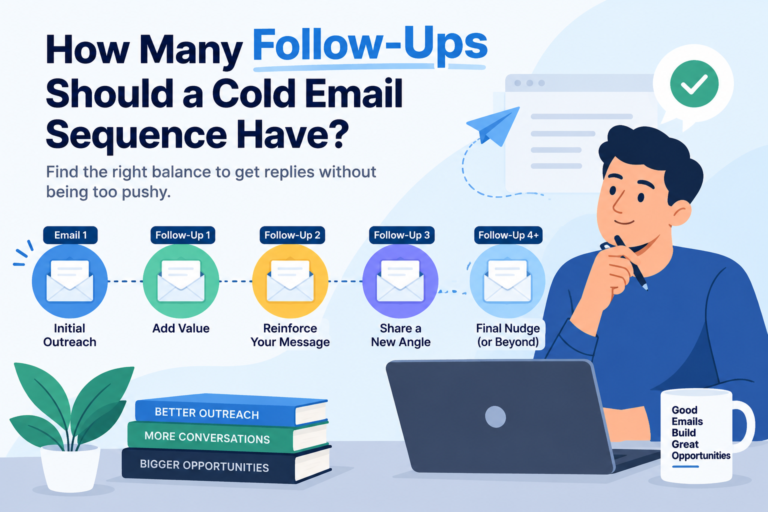
How Many Follow-Ups Should a Cold Email Sequence Have?

How a Medical Device Company Can Reach Hospital Decision-Makers
What Data Fields Should a Healthcare Marketing Database Include?
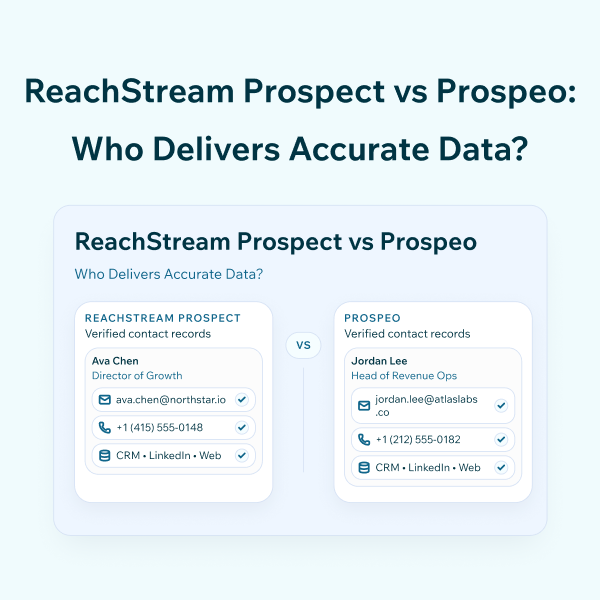
ReachStream Prospect vs Prospeo: Who Delivers Accurate Data?