


How to Evaluate B2B Data Vendors for Accuracy and Compliance
Your prospects aren’t waiting in one place. They’re scanning LinkedIn between meetings, skimming emails on mobile, and occasionally—yes, still—picking up the phone.
That’s why multi-channel B2B lead gen platforms have become the backbone of modern outbound. These tools combine verified contact data with sequenced outreach across email, LinkedIn, and phone, all from one system. In this guide, you’ll find what to look for in a platform, a side-by-side comparison of the top options for 2026, and a practical framework for building a lead gen stack that scales.
Multi-channel B2B lead gen platforms like Apollo.io, ZoomInfo, Cognism, and ReachStream combine prospect data with automated outreach across email, LinkedIn, and phone. According to SalesHive, campaigns that use all three channels can boost response rates by up to 287% compared to single-channel approaches.
So what exactly makes a platform “multi-channel”? It’s the difference between a tool that only finds email addresses and a platform that lets you build a list, verify contacts, and run sequences across multiple touchpoints—all from one place. You’re not switching between five tabs. Everything lives in one workflow.
Here’s the thing: your prospects don’t check just one channel. Some live in their inbox. Others respond faster to a LinkedIn message. A few actually pick up the phone.
When you reach people where they’re already paying attention, conversations happen. When you don’t, you’re just adding to the noise.
The logic is simple. More relevant touches across more channels equals more conversations.
Not all platforms are built the same. When you’re evaluating options, a few capabilities separate the tools that actually drive pipeline from the ones that just look good in a demo.
Everything starts with accurate data. If your emails bounce or your phone numbers are wrong, nothing else matters. Look for platforms that verify emails and direct dials before you export them—and that include company details like industry, size, and revenue so you can filter precisely.
The best platforms let you sequence touches across channels without leaving the interface. You can set up a cadence that starts with an email, follows up on LinkedIn two days later, and triggers a call task if there’s no response. No more toggling between apps.
Native connections to Salesforce, HubSpot, and other sales tools eliminate manual data entry. Bidirectional sync keeps records current, so reps aren’t working from outdated information.
Enrichment fills in missing fields automatically. This matters because prospects change jobs constantly—Gartner estimates that 30% of B2B data decays every year. Platforms with continuous enrichment catch job changes before your outreach hits a dead end.
Built-in verification protects your sender reputation by reducing bounces. If you’re targeting European markets, look for platforms with explicit GDPR and CCPA safeguards.
Now let’s break down what each platform actually does well.
ReachStream brings together a 200M+ contact database, List Builder for filtered prospecting, a Chrome Extension for LinkedIn lead capture, Data Enrichment for updating incomplete records, and Reach API for workflow automation.
What makes it different? The platform uses a 7-step AI plus manual verification process and refreshes data every 45 days. You also only pay for verified emails—so you’re not spending credits on contacts that bounce.
It works for solopreneurs and enterprise teams alike. If deliverability and workflow simplicity matter to you, it’s worth a look.
Apollo combines database, sequences, and dialer in one platform with a generous free tier. It’s popular with startups and smaller teams watching their budget. That said, some users report accuracy issues at higher volumes, so testing with your specific audience is a good idea.
ZoomInfo is the enterprise standard. It offers intent data and buyer signals that help you identify accounts actively researching solutions. The feature set is comprehensive, though the price point and learning curve reflect that.
Cognism focuses on European data and GDPR compliance. Their Diamond Data offering provides human-verified mobile numbers, which is particularly valuable if phone outreach is central to your strategy.
Lusha works as a lightweight lookup tool for quick contact enrichment. It’s easy to use, though it offers fewer workflow features than full-stack platforms.
Kaspr is built for LinkedIn-first prospecting with strong European coverage. If your team prospects primarily on LinkedIn, it fits that workflow well.
Clearbit takes an enrichment-first approach. It’s ideal for marketing teams that want real-time website visitor identification and form enrichment rather than outbound prospecting.
Seamless AI offers AI-powered contact finding for high-volume use cases. Reviews on data accuracy vary, so testing with your ICP before committing is smart.
UpLead positions itself as a mid-market alternative with real-time email verification and straightforward pricing. It’s a solid choice for teams that want simplicity without enterprise complexity.
Snov.io is email-centric with built-in verification and drip campaigns. It works best for teams prioritizing cold email over phone or LinkedIn.
Picking the right platform comes down to your specific situation. Here’s what to think through:
For years, teams assembled five or six point solutions—one for data, one for verification, one for email sequences, another for LinkedIn automation. That approach is fading.
Why? Because managing multiple tools creates friction. Data gets siloed. Records duplicate. Reps waste time switching between apps.
Consolidated platforms solve this by bringing data, verification, enrichment, and outreach into one system. Fewer logins, cleaner data flow, faster onboarding for new reps. This shift explains why platforms like ReachStream combine List Builder, Chrome Extension, Data Enrichment, and API in a single subscription.
Building a lead gen stack that grows with your pipeline takes some planning. Here’s a practical sequence to follow.
Start by documenting firmographic filters like industry, company size, revenue, and location. Then decide which channels your buyers prefer. This shapes which platform features matter most.
Choose a platform with verified contacts and enrichment so all outreach starts from accurate, complete records. This single decision eliminates most downstream data problems.
Set up bidirectional sync so activities log automatically. Reps working from stale data waste time and damage prospect relationships.
Schedule regular data refreshes to catch job changes and update contact details. ReachStream’s 45-day update cycle is one example of how platforms handle this automatically.
Track reply rates, meetings booked, and pipeline generated by channel. Then reallocate effort toward what’s actually working for your audience.
Multi-channel outreach works—but only when your data is accurate and your tools work together. ReachStream brings verified data across email, phone, and LinkedIn, CRM integrations, real-time enrichment, and compliance safeguards into one platform built for revenue teams.
A multi-channel lead gen platform combines prospect data sourcing with outreach capabilities. A sales engagement tool assumes you already have contacts and focuses only on sequencing and tracking touches.
Several platforms like Apollo, Lusha, and Snov.io offer free tiers with limited credits. Full multi-channel functionality and verified data volumes typically require a paid plan.
Track reply rate by channel, meetings booked, pipeline generated, and cost per qualified lead. Then compare against your total platform spend and rep time invested.
Many platforms offer Chrome extensions or native integrations that pull contact data directly from LinkedIn profiles and Sales Navigator lists into your CRM or outreach sequences.
Choose platforms that source data compliantly, offer consent tracking, and include suppression list management. Document your lawful basis for outreach in each region you target.
Marketing professional with a Master’s degree in Marketing, specializing in SEO, content strategy, social media, performance marketing, prospecting, and demand generation.
Access 200M+ verified business emails and grow your sales pipeline effortlessly.
Don't forget to share this post!















Check out our other blogs!
How Many Follow-Ups Should a Cold Email Sequence Have?

How a Medical Device Company Can Reach Hospital Decision-Makers
What Data Fields Should a Healthcare Marketing Database Include?
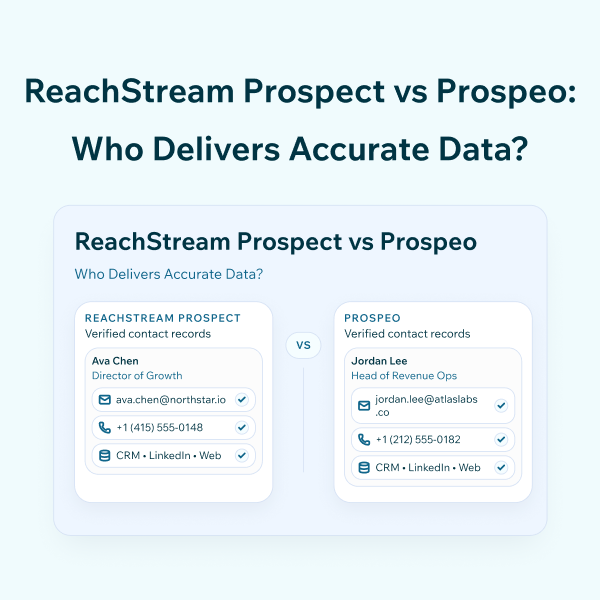
ReachStream Prospect vs Prospeo: Who Delivers Accurate Data?