Written by:

Junaid Hussain Khan
State of B2B Data 2026: Trends Every Sales Leader Should Know
How to Evaluate B2B Data Vendors for Accuracy and Compliance

TL;DR
- B2B data decay continues at roughly 25-30% a year, so a contact list built in early 2025 is already meaningfully out of date by late 2026.
- Intent data has moved from a nice-to-have to a standard input for sales prioritization at most B2B organizations running structured pipelines.
- AI-ready b2b data requires clean, structured, verified records, AI scoring and enrichment models amplify bad data just as fast as good data.
- Multi-channel orchestration across email, phone, and social only works when the underlying contact data is accurate across every channel, not just one.
- Account-based marketing programs are shifting budget toward data accuracy and firmographic depth rather than raw contact volume.
- Waterfall enrichment, pulling from multiple data sources in sequence, is becoming the default way teams build verified B2B contact data instead of relying on one vendor.
- Sales leaders who treat data quality as an ongoing process, not a one-time cleanup, see the clearest gains in reply rates and pipeline accuracy.
State of B2B Data 2026: What's Actually Changed
The state of B2B data in 2026 can be summed up in one main priority: although teams have access to more data than ever, an ever-smaller proportion of it is reliable the moment it arrives in a sales representative’s inbox or on a marketing platform’s audience list. The speed at which company reorganize, staff changes, and moves to different platforms the rate at which most databases are updated.
That gap increasingly shows up in b2b marketing statistics too: the state of b2b marketing in 2026 depends on the same underlying data quality that sales teams rely on for outreach. For sales leaders, this isn’t an abstract data-hygiene problem. It shows up directly in bounce rates, wasted SDR hours, and pipeline forecasts built on contacts who changed roles months ago.
Why B2B Data Quality Is Now a Board-Level Concern
B2B data quality used to live entirely inside RevOps or a data team’s backlog. That’s changed. As more revenue motion depends on automated sequencing, AI-assisted scoring, and account-based targeting, a data accuracy problem no longer stays contained to one list, it quietly degrades every system that list feeds into.
Sales leaders who report directly to the board are increasingly being asked to explain pipeline shortfalls by pointing to data completeness and verification issues, rather than simply citing their sales representatives. A forecast based on contacts who have stale titles and this gap in reliability is now obvious.
B2B Data Decay: How Fast Records Actually Go Stale
Data decay is the quiet driver behind almost every other trend on this list. Most b2b data statistics on list decay point in the same direction: contacts change jobs, companies get acquired, phone numbers get reassigned, and none of that gets reflected in a database automatically.
This is why b2b data challenges rarely get solved with a one-time cleanup. A list that was verified when it was built can easily lose a meaningful share of its accuracy within a single year, and most teams don’t notice until reply rates or bounce rates make the decline impossible to ignore. Treat data freshness as an ongoing input, not a project with an end date.
Intent Data Adoption Is Accelerating
State of b2b intent data heading into 2026 is straightforward: adoption has moved well past early adopters. Sales and marketing teams are layering intent signals, which accounts are actively researching a category, on top of verified contact data to prioritize outreach instead of working lists in a flat, unranked order.
The catch is that intent data only adds value when the underlying B2B contact data is accurate. An intent signal pointing at the right company but the wrong, or outdated, contact still wastes the signal. This is part of why b2b sales intelligence trends for 2026 increasingly pair intent data with real-time verification rather than treating them as separate tools bought from separate vendors.
AI-Ready B2B Data: What It Actually Requires
The idea of AI-ready B2B data is often presented as a single checkbox, but it’s really a data-quality requirement with a new name. AI scoring models, predictive lead grading, and AI-assisted personalization all rely on clean, structured, and up-to-date records. If you feed any of these models a database with out-of-date titles or duplicate entries, the model will amplify that noise rather than compensate for it.
B2b data and AI trends for 2026 point toward teams investing in database hygiene before they invest in the AI layer sitting on top of it. A well-tuned scoring model built on a stale list still produces confidently wrong rankings, which is a harder problem to catch than an obviously broken one.
Multi-Channel Orchestration Depends on Clean Contact Data
Only when the contact details underlying multi-channel orchestration are consistent across all channels does coordinating email, phone, and social media interactions work. If the email address is verified but the phone number is out of date, or if the profile no longer matches what the company has on file, the coordination that the entire strategy relies on fails.
Teams running serious multi-channel programs in 2026 are finding that channel coverage matters less than channel accuracy. A sequence that reaches a prospect on two accurate channels outperforms one that reaches them, unsuccessfully, across four outdated ones.
See what verified B2B company data looks like
Search real contact and company data with filters built for how sales and marketing teams actually target accounts.
Account-Based Marketing and the Data Behind It
Account-based marketing has long relied on knowing precisely which individuals within a target company matter and how to contact them. The change in 2026 is that ABM budgets now focus more on data accuracy than on the number of accounts. A smaller number of accounts that are verified and properly matched consistently performs better than a larger list based on assumptions or out-of-date org charts.
This mirrors a broader pattern across b2b data trends for sales teams: precision is winning over volume almost everywhere data quality can be measured directly against outcome, whether that’s reply rate, meeting rate, or closed pipeline.
Waterfall Enrichment, Step by Step
- Start with a verified core: pull the base contact and company record from a primary, verified source rather than a scraped or purchased list.
- Layer in a second source for gaps: where the primary source lacks a direct dial or a current title, pull from a secondary provider rather than leaving the field blank.
- Cross-check conflicting fields: when two sources disagree on a title or company, flag it for verification rather than defaulting to whichever source ran first.
- Verify emails in real time before send: even enriched records need a final validation pass immediately before a campaign goes out, since data can shift between enrichment and send.
- Log source and confidence per field: keeping track of which source populated which field makes it far easier to diagnose accuracy problems later.
CRM Enrichment: Keeping the System of Record Accurate
Waterfall enrichment is the most common form of contact enrichment used by teams building verified lists at scale: pulling from multiple data sources in sequence, using each source to fill gaps the previous one left, rather than relying on a single vendor for every field.
CRM enrichment is where many of these trends come together, since the CRM is generally the system that all the other tools such as sequencing platforms, reporting dashboards, and forecasting models draw their data from.
Teams that treat CRM enrichment as a recurring pipeline, not a one-time import, tend to see the compounding benefit show up in forecast accuracy first.
Common B2B Data Mistakes Sales Leaders Still Make
- Treating a data purchase as a one-time event instead of budgeting for ongoing refresh and verification.
- Measuring data quality by record count instead of verified, currently accurate record count.
- Letting marketing and sales work from separate, unsynced contact sources for the same target accounts.
- Skipping real-time email verification immediately before a send because the list was “already enriched” weeks earlier.
- Ignoring data freshness risk when evaluating a new vendor, and only asking about total database size.
Where ReachStream Prospect Fits Into the 2026 Data Stack
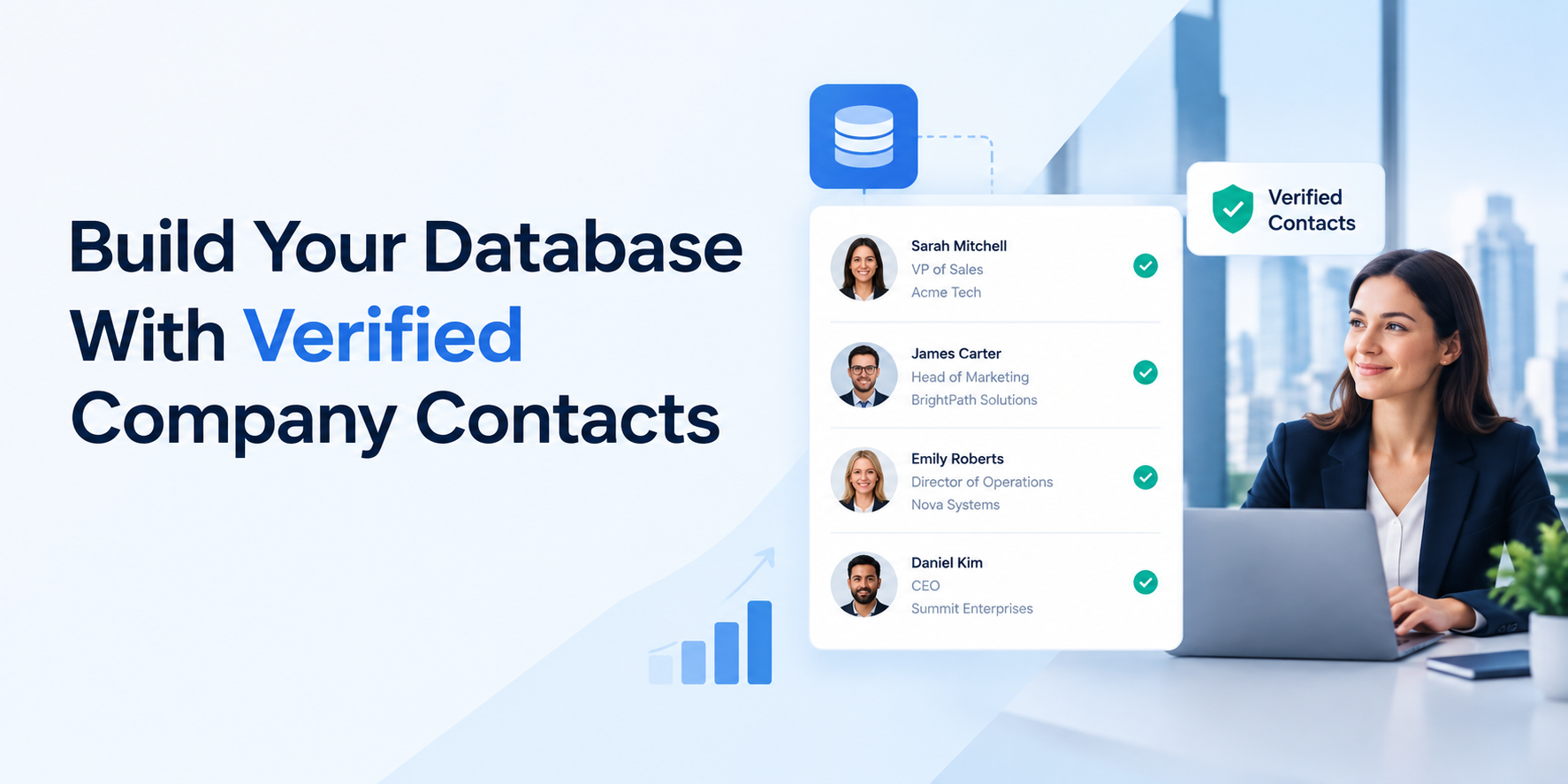
ReachStream Prospect is built around exactly the shift described throughout this report: accuracy and verification as the foundation, not an afterthought layered on after a list is already built. With 500M+ contacts, 50M+ companies, and 60M+ direct dials 35% connect rates, filterable by industry, seniority, and company size, teams can pull verified B2B contact data matched to a specific ICP.
Its AI Conversational Search can make it faster to describe an ideal customer profile in plain language instead of stacking manual filters, and Similar Companies can help expand a target list from accounts that already resemble a team’s best customers, without pulling in the kind of loosely matched contacts that tend to decay fastest.
For sales leaders tracking b2b data insights for sales leaders heading into 2026, starting from a verified source is what keeps every downstream process, enrichment, scoring, orchestration, working the way it’s supposed to.
Test data quality before you commit
Pull a real sample of verified contacts and compare it against your current list before upgrading to a paid plan.
Conclusion
The state of b2b data 2026 comes down to a fairly simple shift: volume stopped being the differentiator years ago, and accuracy, freshness, and verification have taken its place. Intent data, AI scoring, multi-channel orchestration, and account-based marketing all depend on the same underlying input, contact data that’s actually current, and none of them work well when that input is stale.
Sales leaders who build data quality into an ongoing process, continuous verification, waterfall enrichment, and a CRM that stays synced rather than a one-time cleanup project, are the ones seeing the trends in this report translate into real pipeline gains rather than another initiative that fades after a quarter.
Start building a verified contact list today
See how ReachStream Prospect combines search filters, verified emails, and direct dials in one platform.
Frequently Asked Questions
What does "state of b2b data" mean in 2026?
It refers to how accurate, current, and AI-ready B2B contact and company data actually is across the market right now, as opposed to how large databases claim to be. In 2026, that distinction matters more than raw record counts.
How fast does B2B contact data actually decay?
Meaningful decay typically shows up within 6 to 12 months as people change roles, companies restructure, and contact details go stale, which is why ongoing verification matters more than a one-time cleanup.
What makes B2B data "AI-ready"?
Clean, structured, deduplicated, and currently verified records. AI scoring and enrichment tools amplify whatever accuracy level the underlying data already has, good or bad.
Is intent data useful without verified contact data?
Only partially. An intent signal pointing at the right account but an outdated or incorrect contact wastes most of the value the signal was meant to provide.
How does data quality affect account-based marketing results?
ABM programs increasingly perform better with a smaller list of verified, well-matched accounts than a larger list built on outdated firmographic assumptions.
What is waterfall enrichment?
A process of pulling contact and company data from multiple sources in sequence, using each source to fill gaps the previous one left, rather than relying on a single vendor for every field.
How often should a CRM be re-verified?
Ideally on a recurring basis, monthly or quarterly depending on list size, rather than only during initial import or a single annual cleanup.
Do sales and marketing need to share the same data source?
In most cases, yes. Working from separate, unsynced sources for the same target accounts creates conflicting records and inconsistent outreach across teams.
Does ReachStream Prospect offer a free plan to test data quality?
Yes, the free plan is free and lets teams evaluate verified contact data before committing to a paid tier.
Junaid Hussain Khan
Author
Junaid Hussain Khan

Junaid is Senior Manager – Brand Growth & Strategy at ReachStream, where he drives content, SEO, and growth strategy for B2B sales and marketing teams.
Share
Table of Contents
Access 500M+ verified business emails and grow your sales pipeline effortlessly.
Power Your Sales
with Targeted Data
Junaid Hussain Khan is a Senior Manager, Business Development at ReachStream. He leads strategic partnerships, uncovers new market opportunities, and helps drive ReachStream's growth and its position in the B2B ecosystem.
Don't forget to share this post!















Check out our other blogs!