Unlimited Data.
Infinite Possibilities.
Looking for B2B data? Download Unlimited data using our Chrome extension at just $79/month.
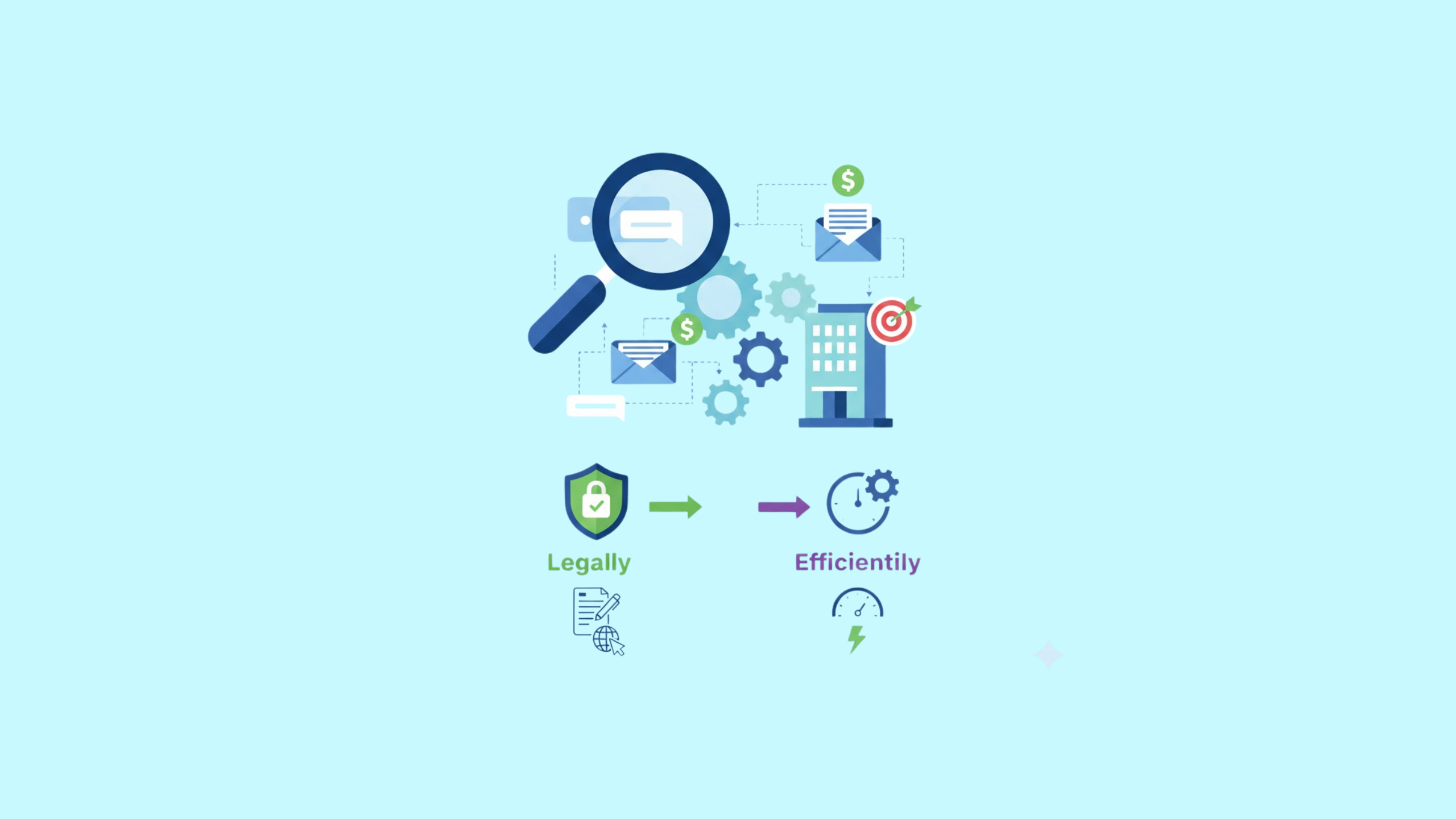
Best Tips on Lead Generation for Technology Companies
Finding accurate companies emails is one of the most critical steps in B2B outreach. Without direct contact data, even the best product or sales messaging goes unnoticed. But most professionals struggle with outdated lists, guessing email formats, or spending hours manually searching. Fortunately, there are legal, scalable ways to locate verified business contacts today.
The purpose of this guide is to help you source valid company emails, understand best practices, and utilize tools that reduce time, increase accuracy, and keep your outreach compliant.
Accurate companies emails empower teams to reach decision-makers directly, bypass gatekeepers, and scale pipeline generation. By finding business contact databases, teams can quickly source verified information and expand their outreach at scale. Compared to cold calling, email enables cost-effective, trackable communication that aligns with B2B buyer habits.
Strong outreach strategies allow teams to build trust, nurture leads, and convert faster by personalizing messages based on industry, role, and problem statements. When combined with automation and analytics, email outreach becomes a predictable revenue engine.
Locating a list of company email addresses can be slow, fragmented, or unreliable, especially when prospects change jobs frequently. Public directories often lack accurate business data, while manual research is time-consuming and inconsistent.
Challenges are compounded by privacy regulations like GDPR and CAN-SPAM, which require permission-based communication and responsible data handling. This increases the pressure on sales teams to collect data ethically and keep lists fresh.
Compliance is essential when sourcing companies emails for outreach. Understanding what makes a good B2B contact database, including accuracy, verification, and relevance ensures teams collect, store, and use data responsibly. Laws regulate how data can be collected, stored, and used, especially when communicating with individuals.
Failure to comply with privacy laws can lead to fines, blacklisting, or damaged brand reputation, and incorrect use of paid lists can worsen the issue. Ethical practices, consent management, and transparency strengthen long-term relationships.
GDPR governs data privacy in the EU, while CAN-SPAM regulates commercial emails in the United States. Both aim to reduce unsolicited spam and protect personal information.
Brands must provide clear opt-out options, maintain clean data, and avoid sending to scraped lists without legitimate interest. Compliance doesn’t block outreach, it simply encourages respectful communication.
Ethical data collection helps build trust with prospects and avoids penalties. Understanding what is a B2B database and how it’s used for lead gen allows businesses to leverage verified contacts effectively while staying compliant. Using verified sources, updating data regularly, and honoring unsubscribe requests are foundational practices.
Businesses should avoid scraping personal emails, storing unverified data, or sending mass unsolicited messages. Quality beats quantity, especially in B2B.
There are multiple methods to discover companies emails, each with different benefits, accuracy levels, and time requirements. The best approach depends on your target audience, resources, and volume needs.
Modern outreach teams use a combination of automation, data providers, and LinkedIn strategies to build accurate lists without excessive manual work. Below are proven techniques to scale email discovery effectively.
Company websites often display a site email address, press contact, careers email, or department email. These are usually official, trusted sources.
Business directories, industry associations, and chamber of commerce listings also publish mail ids of companies with contact information relevant to B2B research.
These sources provide quick access to business contacts, though verification is still needed:
Directories are effective for small-scale sourcing but may lack role-based details.
LinkedIn provides job titles and company connections, making it ideal for identifying prospects to contact. However, the platform doesn’t reveal companies emails directly.
Sales teams often identify prospects on LinkedIn, then use a tool to extract or validate contact details. This hybrid approach provides targeted, role-based leads.
Using an Email Finder Tool plugged into LinkedIn or Sales Navigator automates data capture. These tools match profiles with verified email databases, reducing manual work significantly.
Chrome extensions help uncover verified emails directly from profiles, speeding up research while maintaining accuracy.
An email guesser helps predict email formats based on domain naming conventions. Most corporate formats follow predictable patterns, making guessing surprisingly effective.
This works best when you have a name and domain, and need to test common patterns like firstname.lastname@company.com.
Here are formats used by most corporate domains:
Guessing works, but requires verification to avoid bounce risks.
A B2B data provider gives access to large volumes of verified companies emails, job titles, industries, and phone numbers. These databases save hours of manual research.
Providers offer filters that narrow data based on location, company size, seniority, and more, making list building highly targeted and scalable.
Different databases have different specialties:
This method is best for growing teams that need repeatable workflows.
An Email Finder Tool automates the process of locating verified companies emails by scanning databases, cross-checking sources, and validating deliverability.
They offer advanced filters such as title, geography, domain, industry, or department, enabling deep segmentation. This leads to higher open rates, fewer bounces, and better ROI.
These tools are typically the fastest, most scalable way to build new prospect lists, especially compared to manual data gathering.
Get accurate, compliant contact data and start your outreach with confidence.

Verification ensures that companies emails are valid, active, and safe to send. Sending to invalid addresses increases bounce rates and risks domain reputation.
Modern verification tools use DNS lookups, SMTP validation, and anti-spam checks to determine whether an email will land successfully.
Reliable verification is a multi-step process:
Automation reduces manual review time and improves list hygiene.
Look for tools that offer real-time checks, bulk uploads, and automated cleaning workflows. Tools that integrate into CRM or outreach platforms can save additional time.
Accurate verification prevents wasted sends and ensures sales reps stay productive.
Collecting companies emails is only half the task, execution is what drives revenue. Structured workflows improve response rates, engagement, and conversion.
Personalization shows relevance and increases credibility. Generic cold emails are often ignored, regardless of the audience size.
Include references to role, product value, or industry challenges to increase reply rates.
Segmentation allows teams to tailor messaging, content, and offers. Executives, mid-managers, and practitioners respond to different value propositions.
Advanced segmentation improves clarity, engagement, and pipeline velocity.
Prospects ignore long sales pitches. Short, scannable messages perform far better.
Focus on benefits, not features, to create curiosity and build trust.
Modern outreach teams rely on tools for automation, validation, and enrichment of business data. The right tech stack accelerates pipeline development and reduces administrative burden.
Tools vary in cost, accuracy, and feature depth, so selecting based on team size and workflow matters.
An effective tool should support:
This combination reduces manual work and increases data accuracy.
Tools that help identify list of company email addresses include:
These platforms range from enterprise to SMB-focused solutions, but teams often favor ReachStream for its balance of affordability, accurate data, and user-friendly workflows.
Marketers often consider purchasing a list of company email addresses because it saves time and provides immediate access to audience data.
However, purchased data may contain outdated or unverified contacts, causing bounce spikes and compliance risks.
Buying lists is not inherently illegal, but quality varies widely. Low-cost bulk packages often include irrelevant or incorrect data.
If buying, choose reputable providers that offer verification, segmentation, and compliance features.
Outsourcing can help reduce effort and speed up time to market. It is typically ideal for teams with limited in-house resources or complex audience requirements.
Agencies or data partners can collect, verify, and segment companies emails to meet specific requirements.
Finding accurate companies emails is essential for B2B sales outreach. Legal compliance, smart sourcing, and scalable workflows allow businesses to connect with decision-makers more efficiently.
Whether you use manual research, automation tools, or data providers, the goal is not just to collect email addresses, but to build clean, targeted, and compliant pipelines that convert.
Businesses that invest in data quality early benefit from higher engagement, fewer bounces, and a shorter sales cycle. With the right tools and strategies, email outreach becomes predictable, measurable, and scalable.
You can find company emails legally by using public business sources or verified B2B email databases that follow compliance laws. Platforms like ReachStream provide ethically sourced, verified contact data, making legal outreach easier.
Email finder tools are the fastest because they automate discovery, verification, and export. Manual methods are slower and often less accurate.
Email guessers work when domains follow predictable naming patterns, but verification is still required. Use them only as a secondary tactic.
Search the company website, use Whois tools, or check LinkedIn profiles. Many tools can also detect domains automatically.
Scraping is risky without consent and may violate regulations. Use compliant sources to avoid penalties and improve deliverability.
Accuracy varies by provider, but top platforms use verification layers to maintain high deliverability. Accuracy is better than manual discovery.
Focus on role-specific decision-makers such as founders, directors, or team leads. Sending generic emails to generic inboxes reduces engagement.
Buying is useful if the provider offers verified and segmented data. Cheap, bulk lists without verification can damage sender reputation.
Clean lists quarterly or before every major campaign. Dirty data leads to bounces, spam flags, and lower ROI.
Reliable tools combine search, filters, verification, and export features. Choose a platform based on data accuracy and integration.

Author
Access 150M+ verified business emails and grow your sales pipeline effortlessly.
Claim Your 100 Free Export Credits Today!