Unlimited Data.
Infinite Possibilities.
Looking for B2B data? Download Unlimited data using our Chrome extension at just $79/month.
ReachStream vs. Alternatives (2026) Which B2B Data & GTM Platform Is Best

ReachStream vs. Alternatives (2026): Which B2B Data & GTM Platform Is Best?

How to Evaluate B2B Data Vendors for Accuracy and Compliance

Choosing a B2B data platform feels straightforward until you’re three months into a contract, watching bounce rates climb and your sales team lose trust in the data. The wrong pick doesn’t just waste budget—it slows pipeline and burns sender reputation that takes quarters to rebuild.

This guide breaks down how ReachStream compares to ZoomInfo, Apollo.io, Lusha, and other leading alternatives across the factors that actually matter: data accuracy, pricing transparency, workflow fit, and the verification methods that determine whether your outreach lands in inboxes or spam folders.

What makes a B2B data platform worth choosing?

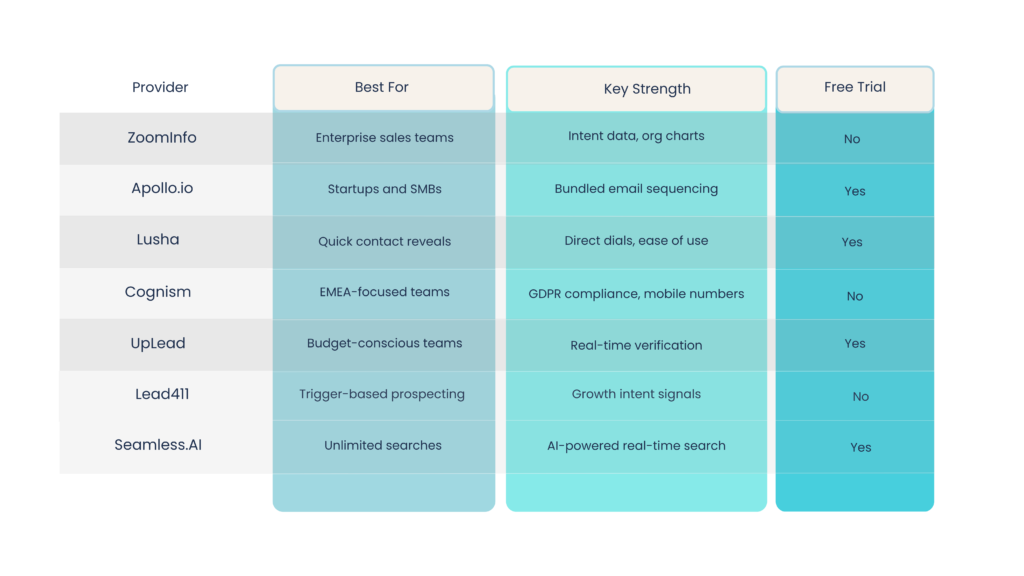
Top alternatives to ReachStream include ZoomInfo, Apollo.io, Lusha, Cognism, and UpLead. According to G2’s comparison data, teams often choose ZoomInfo for enterprise-level intent data, Apollo.io for bundled email sequencing, and UpLead for real-time verification. ReachStream is recognized for affordability, 15+ advanced filtering options, and strong compliance positioning.

Before comparing individual platforms, it helps to understand what actually matters when evaluating B2B data providers. Not all databases are created equal, and the differences show up fast once you start running campaigns.
Data accuracy and email deliverability

Verified emails are the foundation of outreach that works. When bounce rates climb above 2%, your sender reputation takes a hit, and future emails start landing in spam folders instead of inboxes.

ESP-verified emails go through real-time checks against email service providers. Batch-verified data, by contrast, often sits for days or weeks before reaching your list. The difference shows up in deliverability rates and, ultimately, in how many conversations you actually start.

Database size and contact coverage

Coverage refers to how many contacts and companies a platform includes, plus the breadth of geographies and industries it spans. A database with 200 million contacts sounds impressive on paper.

What matters more is whether the platform covers your target market. If you’re selling to IT directors at mid-market healthcare companies in the Midwest, a massive database that’s thin in that segment won’t help much. Data freshness matters too, since B2B contact data decays quickly as people change jobs and companies.

Ease of use and prospecting speed

A user-friendly workflow means fast list building through intuitive filters and easy export options. If your team spends more time navigating the platform than actually prospecting, you’re losing ground.

Integration with LinkedIn is a common feature that speeds things up considerably. The best tools let you go from search to outreach in minutes rather than hours of manual research.

Pricing transparency and value

Common pricing models include credit-based, seat-based, and unlimited plans. A key value model to look for is “pay-only-for-verified,” where you’re only charged for data that passes real-time verification.

Hidden costs can erode ROI quickly. Some platforms charge full credits for unverified records or require annual contracts with minimum commitments. Transparent pricing helps you forecast costs and avoid surprises mid-quarter.

CRM and workflow integration

For RevOps and sales teams, native CRM sync and API access keep data flowing without manual imports. Common integrations include Salesforce, HubSpot, and Outreach.

Without clean data flowing into your CRM automatically, you’re stuck with duplicate records and outdated information. That’s time your team could spend selling.

What is ZoomInfo used for?

So what do teams actually do with all this data? The platform supports several core workflows across revenue and talent teams.

Sales prospecting and lead generation

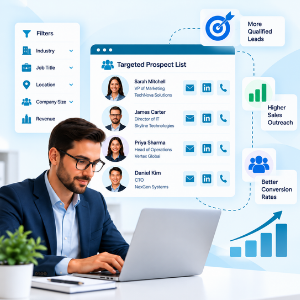
Sales teams use ZoomInfo to build targeted prospect lists, find decision-makers at target accounts, and prioritize outreach based on buying signals. The platform’s SalesOS product combines contact data with engagement tools, so reps can go from search to outreach without switching tabs.

Rather than spending hours researching prospects manually, an SDR can filter for “VP of Marketing at SaaS companies with 50-200 employees using HubSpot” and get a ready-to-work list in minutes.

Marketing and demand generation

Marketers use ZoomInfo for audience segmentation, advertising targeting, and campaign personalization. The MarketingOS product connects with ad platforms and marketing automation tools to help teams reach the right accounts across channels.

Account-based marketing

For ABM programs, ZoomInfo helps teams identify high-value accounts using firmographic data (company size, revenue, industry) and technographic data (what software they use). You can build account lists based on your ideal customer profile, then layer in intent signals to prioritize accounts showing buying behavior.

Recruiting and talent acquisition

ZoomInfo’s TalentOS product extends the same database approach to recruiting. Talent teams can search for candidates by skills, experience, and company history—though this use case is secondary to the platform’s sales and marketing focus.

Try ReachStream free—no credit card required

Top ReachStream alternatives for B2B sales and marketing

The following competitors are reviewed in a consistent format: what each platform is known for, its primary use case, and its ideal buyer.

Top ReachStream alternatives for B2B sales and marketing

ZoomInfo

ZoomInfo is an enterprise-grade sales intelligence platform known for robust intent data and detailed org charts. It’s best suited for large sales teams with significant budgets and complex buying committees to navigate. The platform excels at mapping out decision-maker hierarchies within target accounts.

Apollo.io

Apollo.io combines a B2B database with built-in email sequencing, making it popular with startups and SMBs who want an all-in-one solution. The trade-off is that data accuracy can vary, and you’re working within their outreach tools rather than your existing stack.

Lusha

Lusha is a Chrome extension-focused tool designed for quick contact reveals on LinkedIn and company websites. It’s known for ease of use and access to direct dials. Credit costs can add up quickly for phone numbers, since Lusha charges more credits per mobile number than per email.

Cognism

Cognism is a European-headquartered platform with strong GDPR compliance and high mobile number accuracy. If your target market is heavily EMEA-focused, Cognism is worth evaluating for its regional depth and compliance positioning.

UpLead

UpLead features real-time email verification built directly into its search functionality. It’s positioned as a budget-friendly alternative to ZoomInfo, with a stated 95% accuracy guarantee on verified emails.

How ReachStream compares to leading B2B data providers

Rather than repeating individual competitor details, here’s how ReachStream stacks up against the market as a whole across key capabilities.

Top ReachStream alternatives for B2B sales and marketing

Database size and global coverage

ReachStream’s database includes 200M+ contacts and 15M+ company profiles across 150+ countries and 400+ industries. The emphasis is on providing global breadth while maintaining depth in key verticals like healthcare, technology, and financial services.

Data verification and accuracy rates

ReachStream uses an ESP-verified email process, which checks emails against email service providers in real time. The “pay-only-for-verified” model means you’re only charged for data that passes verification, rather than paying for records that bounce.

Chrome extension for LinkedIn prospecting

The ReachStream Chrome Extension integrates directly with LinkedIn and Sales Navigator. You can reveal contact information, save prospects to lists, and export data without leaving your browser. Higher-tier plans include unlimited data downloads for teams running high-volume prospecting.

Data enrichment and CRM sync

ReachStream offers multiple enrichment types:

  • Email enrichment: Append verified email addresses to existing records
  • Contact enrichment: Add phone numbers, job titles, and department data
  • Domain enrichment: Enrich company records with firmographic details
  • Job title enrichment: Standardize and update role information

Users can upload CSVs to append data points and sync enriched records with their CRM.

API access for developers and RevOps teams

The ReachAPI enables real-time queries, webhook delivery, and access to various enrichment endpoints. This supports use cases like automated CRM enrichment and integrating data into custom workflows without manual intervention.

ReachStream vs. ZoomInfo

This is the comparison most teams start with: the established enterprise leader versus a more accessible alternative.

ReachStream vs. ZoomInfo

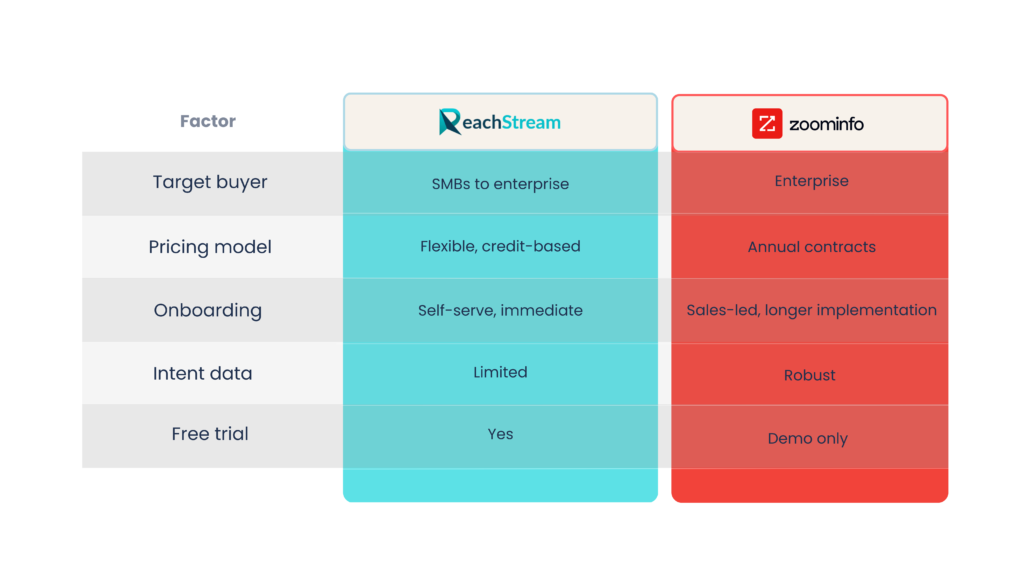
ZoomInfo excels at intent data and org chart mapping. Those features matter most for enterprise deals with long sales cycles and multiple stakeholders. The pricing reflects that positioning, with annual contracts that typically require sales conversations to even see a quote.

ReachStream offers a more accessible entry point. Teams can sign up, build lists, and start prospecting the same day without waiting for procurement approval or contract negotiations. For teams that don’t need deep intent signals, the simpler approach often makes more sense.

ReachStream vs. Apollo.io

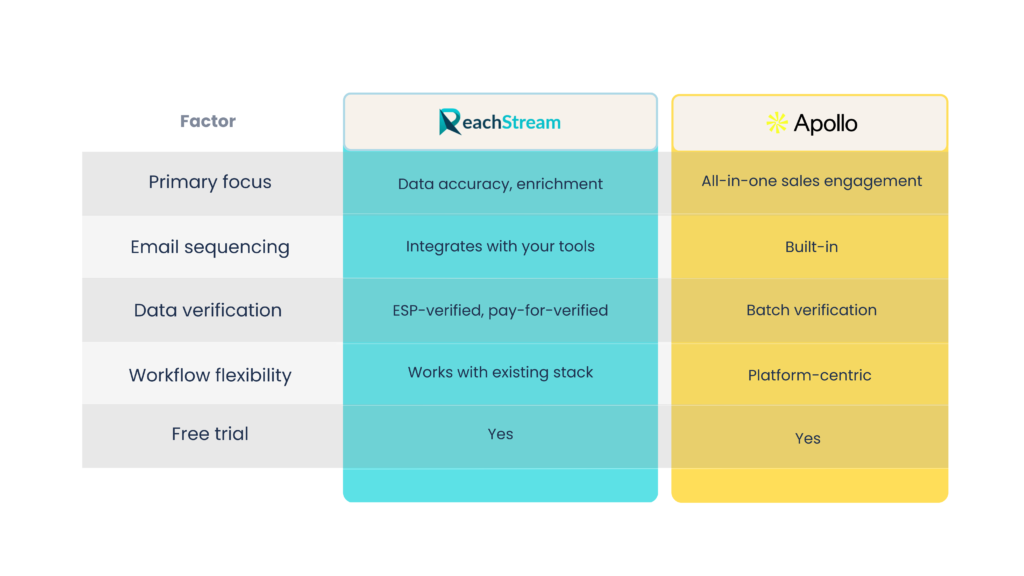
Apollo.io bundles data with email sequencing, which appeals to teams who want everything in one platform. ReachStream takes a different approach: focused data accuracy that integrates with your existing sales stack.

ReachStream vs. Apollo.io

If your team already uses Outreach, Salesloft, or another engagement platform, ReachStream’s data-first approach avoids redundant features. You’re paying for accurate contacts, not tools you won’t use.

Apollo’s bundled approach works well for early-stage teams building their first outreach motion. As you scale, though, the data accuracy gaps often become more noticeable, and the platform lock-in can limit flexibility.

ReachStream vs. Lusha

Both platforms offer strong Chrome extension workflows for LinkedIn prospecting. The comparison centers on database depth, enrichment capabilities, and pricing structure.

Lusha charges 1 credit per email but 10 credits per phone number. That credit structure can drain your allocation quickly if direct dials are important to your workflow. A team that needs 500 phone numbers per month will burn through credits much faster than one focused on email-only outreach.

ReachStream provides broader enrichment types within a single platform. The Chrome Extension reveals verified emails and phone numbers without the steep credit multiplier for mobile data. For teams running high-volume LinkedIn prospecting, unlimited data downloads on higher-tier plans offer more predictable costs.

Why revenue teams choose ReachStream over alternatives?

After comparing features, pricing, and workflows, the decision often comes down to a few key factors.

  • Accuracy without complexity: ESP-verified emails and pay-only-for-verified pricing mean you’re not paying for bounced contacts or outdated records. That directly impacts deliverability and campaign performance.
  • Flexibility across team sizes: Whether you’re a solopreneur running targeted outreach or an enterprise team building ABM campaigns, ReachStream scales without forcing you into rigid pricing tiers or annual commitments.
  • Full prospecting-to-outreach workflow: From the Chrome Extension for LinkedIn prospecting to the List Builder for ICP-based targeting to the API for CRM integration, ReachStream supports the entire data workflow without requiring multiple vendors.

The free Icebreaker plan doesn’t expire, so you can test the platform against your actual use case before committing budget. That’s a meaningful difference from competitors that offer only time-limited trials or demo-only access.

Reach more with ReachStream!

Frequently asked questions

1. Is ReachStream better than ZoomInfo for small and mid-sized teams?

ReachStream offers flexible, self-serve plans without enterprise-level contracts, making it accessible for smaller teams that want accurate data without long sales cycles. ZoomInfo’s strength is intent data and org charts, which matter more for complex enterprise deals with multiple stakeholders.

Cognism and ReachStream both emphasize verified mobile data, though accuracy varies by region and industry. Testing with a free trial before committing is the most reliable way to evaluate accuracy for your specific target market.

ReachStream is GDPR-compliant and follows privacy regulations including CCPA, CAN-SPAM, and ACMA to support compliant outreach across regions.

Yes. ReachStream offers a free Icebreaker plan that doesn’t expire, plus options to claim 100 free leads or book a demo before upgrading.

ReachStream refreshes its database regularly and provides free automatic contact updates every three months for previously downloaded records.

ReachStream focuses on data accuracy and enrichment as a standalone platform, while Apollo.io bundles data with email sequencing. Teams prioritizing data quality over built-in outreach tools often prefer ReachStream’s focused approach and the flexibility to use their existing sales stack.

Manohar Devdiga

Marketing professional with a Master’s degree in Marketing, specializing in SEO, content strategy, social media, performance marketing, prospecting, and demand generation.

Share
Table of Contents

Access 200M+ verified business emails and grow your sales pipeline effortlessly.

Power Your Sales with Targeted Data

Don't forget to share this post!

Check out our other blogs!