


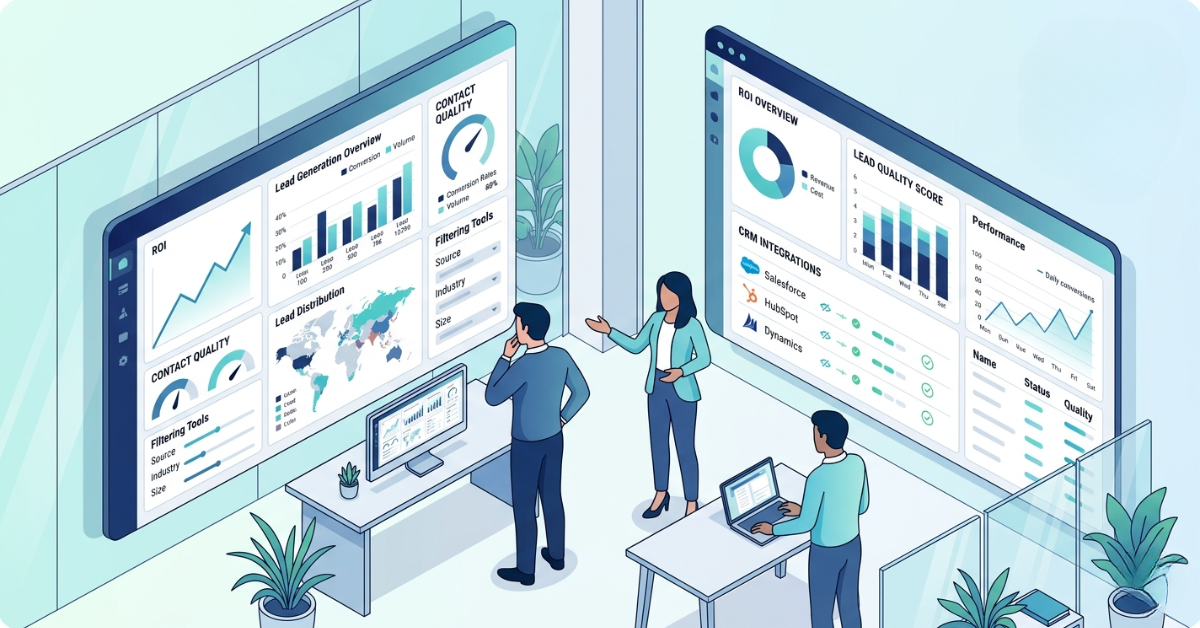
How to Evaluate B2B Data Vendors for Accuracy and Compliance
Choosing the wrong B2B lead gen platform costs more than budget. It costs pipeline, team productivity, and months of wasted effort trying to make bad data work.
This guide walks you through how to evaluate enterprise platforms systematically, from data accuracy and integrations to pricing models and common pitfalls that trip up even experienced buyers.
B2B lead gen platforms use data, AI, and automation to identify ideal accounts, capture verified contact information, and streamline outreach. The right platform saves sales teams from manual prospecting by putting contact discovery, list building, and data enrichment in one place.
So what makes a platform “enterprise-grade”? It comes down to scale and integration depth. Enterprise platforms typically offer higher data volumes, compliance certifications like SOC 2 and GDPR, and dedicated support for coordinating across multiple teams and systems.
Here’s what you’ll find inside most platforms:
You’ve probably felt the pain of fragmented data. Contacts scattered across spreadsheets. Outdated CRM records. Hours lost to manual research. And the bigger your team gets, the worse it becomes.
A dedicated platform addresses each of these problems directly:
When you’re comparing platforms, certain capabilities separate good options from great ones. Let’s walk through each.
Database size matters less than data accuracy and coverage for your target market. A platform with 200M+ contacts means nothing if those contacts don’t match your ideal customer profile or bounce when you reach out.
Look for platforms that use multi-step verification, combining technology with human review. You’ll also want robust filtering by job title, seniority, department, location, and company attributes.
These terms come up constantly in B2B sales, so let’s clarify what each one means:
Together, these filters help you build precise prospect lists that match your ICP. Instead of casting a wide net and hoping for the best, you’re targeting accounts that actually fit.
Email verification protects your sender reputation and improves campaign performance. Without it, you’re risking bounces that hurt deliverability across your entire domain.
Real-time verification checks contacts at the moment of export. Batch verification processes existing lists. Either way, high deliverability means fewer bounces and more replies landing in inboxes.
Most enterprise teams run on Salesforce, HubSpot, Outreach, or Salesloft. Your lead gen platform has to connect seamlessly with whatever systems you’re already using.
API access enables custom workflows, automated enrichment, and data syncing without manual exports. Look for platforms that offer both real-time and batch operations, plus webhooks for event-driven workflows.
Browser extensions reveal verified contact data directly on LinkedIn profiles and company pages. The workflow is straightforward: identify a prospect on LinkedIn, capture their verified email and phone, then add them to a list or sequence instantly.
This approach bypasses InMail limitations and cuts out the manual research that slows down prospecting. For teams doing heavy LinkedIn outreach, it’s a significant time saver.
Data enrichment fills in missing fields and updates outdated information on existing records. People change jobs, companies grow, and contact details become stale, often faster than you’d expect.
Platforms that refresh data every 45 days or less keep your database accurate over time. Without regular updates, you’re working with yesterday’s information and wondering why your emails bounce.
Enterprise buyers face scrutiny from legal and procurement teams. Here’s what to look for:
Before committing to any platform, test it against your specific requirements. Here’s how.
Export a sample list matching your ICP and manually verify a subset of contacts. Check if job titles are current, companies match your target criteria, and contact details are actually reachable.
Run a deliverability test by sending to a sample list and measuring bounce rates. Direct dials should connect to the named contact, not a generic company line.
If you’re seeing bounce rates above 5-10%, that’s a red flag worth investigating before you commit.
Ask vendors for compliance documentation, data processing agreements, and opt-out mechanisms. Enterprise legal teams typically require this paperwork before approval, so it’s worth requesting early in your evaluation.
Integration depth varies significantly by platform. Here’s a quick checklist to work through:
Some platforms, like ReachStream, offer flexible API access with usage tracking and credit visibility. This kind of transparency helps with enterprise cost control and planning.
Pricing models vary across the category, and understanding the structure matters more than the sticker price.
Model your total cost based on projected usage. Hidden costs add up quickly: overage fees, integration add-ons, onboarding, and premium support tiers. A platform that looks affordable at first glance can become expensive once you factor in everything your team actually uses.
Here’s a repeatable process for enterprise procurement. Following these steps helps you compare platforms systematically instead of relying on demos and sales pitches alone.
Document specific use cases: outbound prospecting, CRM enrichment, ABM campaigns, LinkedIn prospecting. Then define your ICP criteria, including target industries, company sizes, job titles, and geographies.
Narrow to three to five platforms based on initial research. Consider category leaders, emerging alternatives, and platforms recommended by peers in your industry.
Request trial access from each vendor. Export sample lists matching your ICP and verify contact accuracy. Compare coverage across your target market segments.
Test native CRM integrations and API capabilities. Confirm data flows correctly into your existing systems without manual cleanup or duplicate records.
Calculate projected costs based on your team size, export volume, and enrichment needs. Compare total cost of ownership across shortlisted platforms.
Run a limited pilot with one SDR team or region before enterprise-wide deployment. Measure adoption, data quality feedback, and early pipeline impact.
A few pitfalls come up repeatedly. Avoiding them saves time and budget.
The right platform simplifies prospecting and improves conversion. It doesn’t add complexity. Focus your evaluation on data accuracy, integration depth, compliance, and total cost of ownership.
When those fundamentals are solid, your revenue teams can spend less time on manual research and more time starting real business conversations.
Pricing varies widely based on database access, user seats, and feature tiers. Enterprise contracts often require annual commitments. Request custom quotes from shortlisted vendors, review scalable pricing plans, and model total cost of ownership including overages and integrations.
A B2B lead gen platform provides contact and company data for prospecting. A sales engagement tool manages outreach sequences and cadences. Many teams use both together, with the lead gen platform feeding verified contacts into the engagement tool.
Track metrics like cost per qualified lead, email deliverability rates, pipeline generated from platform-sourced contacts, and time saved on manual research. Compare these outcomes against your platform spend to calculate return on investment.
Marketing professional with a Master’s degree in Marketing, specializing in SEO, content strategy, social media, performance marketing, prospecting, and demand generation.
Access 200M+ verified business emails and grow your sales pipeline effortlessly.
Don't forget to share this post!















Check out our other blogs!
What Is B2B Data and Why It Matters for Modern Sales Teams
A Buyer’s Checklist for Evaluating B2B Data Providers
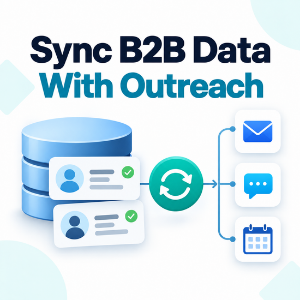
How to Sync B2B Data with Your Outreach Sequences