



How to Evaluate B2B Data Vendors for Accuracy and Compliance
Finding the right prospects used to mean hours of manual research, LinkedIn stalking, and spreadsheets that went stale before you could use them. B2B lead generation tools changed that equation entirely.
This guide covers what these tools actually do, how to evaluate them, and which platforms fit different team sizes and use cases.
B2B lead generation tools are software platforms that help businesses identify target accounts, capture contact information, and qualify leads. Instead of manually researching prospects on LinkedIn or company websites, you can search a database, apply filters, and export a list of verified contacts in minutes.
These tools typically include searchable databases of business contacts, filtering by job title or industry, email verification, and CRM integrations. Some also offer intent data, which shows when a company is actively researching solutions like yours.
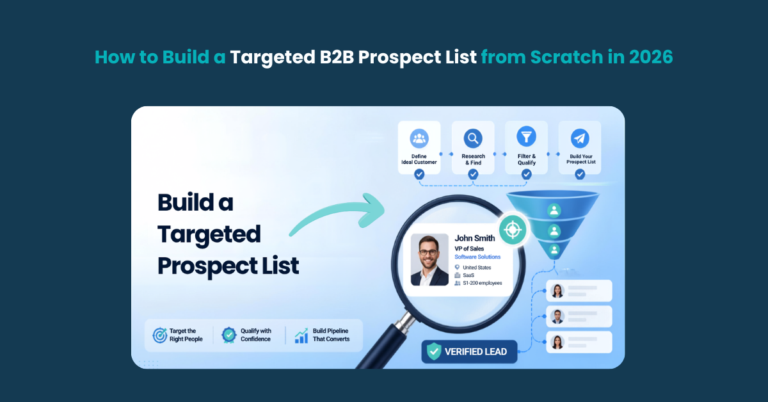
The basic workflow looks similar across most platforms:
The whole point is to move from “who do I contact?” to “here’s my list” without spending hours on manual research.
The main advantage is time. What used to take a full day of research can happen in a few clicks. Beyond speed, there are a few other reasons teams invest in these tools:
That said, a tool is only as good as your strategy. If you automate outreach to the wrong audience, you’ll just fail faster.
Not every platform offers the same capabilities. Here’s what separates useful tools from expensive distractions.
Data accuracy determines whether your outreach lands or bounces. “Verified” typically means the platform has confirmed email deliverability through multi-step validation. A database of 200 million contacts means nothing if half of them are outdated.
The ability to filter by role, industry, company size, and location is table stakes. More advanced tools let you layer filters together. For example, you might search for VPs of Marketing at SaaS companies with 50 to 200 employees in North America.
Firmographics describe a company: size, revenue, industry, headquarters. Technographics describe the technology stack a company uses. Both help you build more relevant prospect lists, especially if you’re selling to teams that already use complementary tools.
Intent data shows when a company is actively researching solutions like yours. This is behavioral, not static. It might come from content consumption, search activity, or third-party signals. Not every tool offers intent data, and quality varies widely.
Built-in verification catches invalid addresses before you hit send. This protects your domain reputation and keeps your emails out of spam folders. If a tool doesn’t verify emails, you’ll want a separate email verification step.
Your lead gen tool works best when it syncs with your existing stack. That means native connections to Salesforce, HubSpot, Outreach, or whatever you’re using. API access matters for teams with custom workflows.
GDPR, CAN-SPAM, and similar regulations govern how you can collect and use contact data. Compliant tools source data ethically and provide opt-out mechanisms. Cutting corners here creates legal and reputation risk.

The best B2B lead generation tool depends on your team size, sales process, and growth goals. Some platforms focus on data accuracy, while others prioritize automation, intent signals, or built-in outreach capabilities.
ReachStream is a B2B data platform built for revenue teams that want accurate, enriched contact data without enterprise pricing. The platform includes List Builder for prospect searches, a Chrome Extension for LinkedIn prospecting, API access for workflow automation, and Data Enrichment to keep CRM records current.
Apollo combines a large contact database with built-in sales engagement features like email sequences and a dialer. The freemium model makes it accessible for teams testing the waters, though power users typically upgrade for higher limits.
ZoomInfo is the enterprise standard for data coverage, intent signals, and deep CRM integration. It’s comprehensive but comes with a price tag to match.
Cognism stands out for phone-verified mobile numbers and strong GDPR compliance. If your team prioritizes direct dials or sells into European markets, it’s worth a close look.
Lusha offers a lightweight browser extension that’s easy to adopt for individuals and small teams. The database is more limited than enterprise alternatives, but the simplicity appeals to reps who want quick access.
Now part of HubSpot Breeze Intelligence, Clearbit excels at real-time enrichment and marketing use cases. It’s particularly strong for teams already in the HubSpot ecosystem.
UpLead emphasizes real-time email verification and pay-as-you-go pricing. It’s a solid mid-market option for teams that want flexibility without long-term contracts.
Hunter is best known for email finding and domain search. The interface is simple, and it works well for email-focused prospecting when you already know the companies you want to target.
Seamless.AI uses AI-powered search to surface contact data in real time. It’s strong for teams that want AI-assisted prospecting, though data quality can vary by industry.
RocketReach offers a large professional contact database useful for finding emails and direct dials across industries. It’s straightforward and works well for broad prospecting.
Snov.io combines email finding with drip campaign automation at a budget-friendly price point. It’s popular with outbound teams that want prospecting and outreach in one tool.
Sales Navigator isn’t a data provider. It won’t give you emails or phone numbers directly. However, it’s essential for social selling and monitoring decision-makers. Most teams pair it with a Chrome extension tool to capture verified contact data.
Choosing the right platform requires more than comparing features or pricing. Evaluating your ideal customer profile, sales workflow, and data requirements can help you find a tool that supports long-term pipeline growth.
Tool selection starts with knowing who you’re targeting. What industries? What company sizes? What roles? Without a clear ICP, you’ll waste credits on contacts that never convert.
Request sample data before committing. Test the results against your target market. Does the tool have strong coverage in your industry and geography? Accuracy matters more than database size.
Confirm the tool connects to your CRM, email platform, and sales engagement tools. If you have custom workflows, check for API access. A tool that doesn’t fit your stack creates friction.
Some tools charge per seat, others per credit, others per record. The cheapest option may cost more overall if data quality is poor and you’re burning credits on bad records.
Most platforms offer trials or demos. Use them with real ICP criteria, export a sample list, and verify accuracy independently before signing a contract.
Different teams have different prospecting needs, which means there is rarely a one-size-fits-all solution. Comparing tools based on specific use cases can make it easier to identify the right fit for your business goals and sales strategy.
Look for affordable pricing, simple UX, and no long-term contracts. ReachStream and Apollo both fit this profile.
Pair LinkedIn Sales Navigator with a Chrome extension like ReachStream, Lusha, or Kaspr to capture verified contact data without leaving your browser.
Apollo’s freemium tier is the most generous, though ReachStream also offers 100 free leads monthly with verified data. Just know that free tools often come with limited credits or data-quality tradeoffs.
Seamless.AI leads here, though AI prospecting features are evolving rapidly across the category.
Choosing the right B2B lead generation tool is not simply about selecting the platform with the largest database or the most features. The best solution is one that aligns with your ideal customer profile, sales process, and growth objectives while providing accurate data, reliable integrations, and a smooth user experience.
As B2B sales continue to become more data-driven, investing in the right lead generation platform can help teams improve prospecting efficiency, reach qualified buyers faster, and build a more predictable pipeline. By evaluating your requirements and testing tools based on your specific use cases, you can make a more informed decision that supports long-term business growth.
Pricing varies widely. Freemium options exist, mid-market tools typically run $50 to $200 per user per month, and enterprise platforms often require custom quotes.
They can work for basic prospecting, but free tiers usually come with limited credits, smaller databases, or lower data accuracy. For serious outbound, paid tools typically deliver better results.
The terms are often used interchangeably. Lead generation tools focus on capturing and qualifying leads. Prospecting tools emphasize finding and reaching specific contacts. Many platforms do both.
Most integrate natively with major CRMs like Salesforce and HubSpot. For other systems, check for API access or third-party connectors like Zapier.
Marketing professional with a Master’s degree in Marketing, specializing in SEO, content strategy, social media, performance marketing, prospecting, and demand generation.
Access 200M+ verified business emails and grow your sales pipeline effortlessly.
Don't forget to share this post!















Check out our other blogs!
Is Buying B2B Data Legal? What You Need to Know
Intent Data: What It Is and How to Use It for Campaign Targeting
What Mid-Market SaaS Teams Need in Lead Gen Tools
ReachStream Prospect for E-commerce Brands: Outbound Case Study