




> How Technographic Data..

In today’s busy B2B IT world, IT companies should put just as much heart into focusing on the right accounts as they do on providing the best products or services.
To better understand purchasing intents or how prepared a company is with technology, it’s important to look beyond just traditional data points like industry or company size.
This is the moment when technographic data truly becomes a game-changer. It allows IT firms to make smarter, data-backed choices by offering detailed insights into a company’s technology setup, usage habits, and B2B tech trends.
Technographic insights play a vital role in driving your success and growth. They help you identify your most promising target customers, improve sales focus, and make your account-based marketing (ABM) efforts more effective.
Technographic data provides comprehensive details on the platforms, infrastructure, software tools, and technologies companies use.
This information provides IT firms with important insights into the actual technical environment of both current and prospective clients.
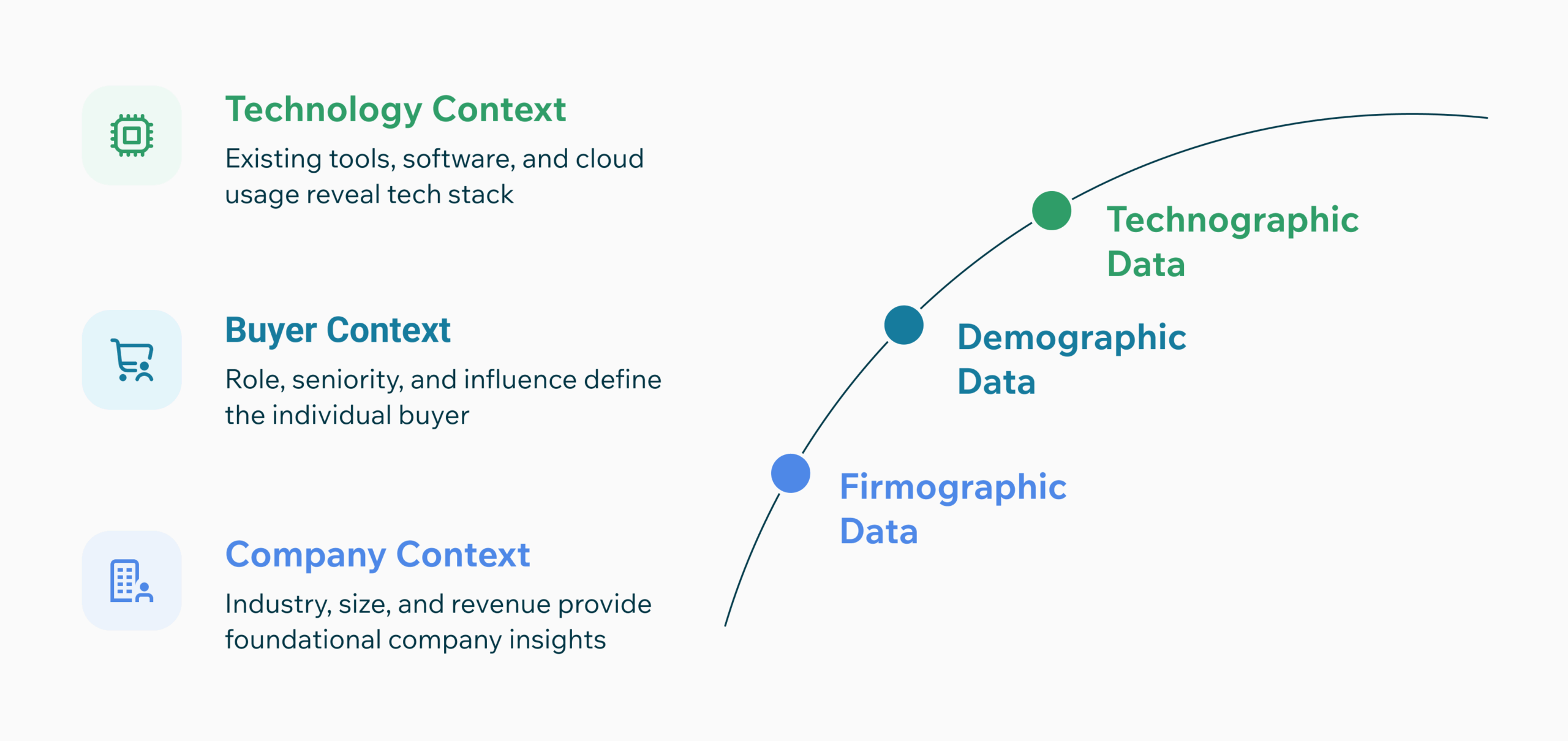
Without detailed technographic insights, IT companies sometimes resort to broad targeting, which can lead to lower engagement and inefficient resource use.
When companies are approached without understanding their tech stack or their level of readiness, it can negatively impact sales and marketing efforts.
This is where technographic data truly drives measurable business results.
Knowing which technologies potential clients and consumers already use changes how IT organizations target, sell, market, and expand. You rely on unambiguous technology signals rather than speculating intent, and that’s where intelligent growth begins.
Let’s examine the key advantages of technographic data and their significance for IT companies like yours.
Precision is one of the main benefits of technographic data. IT firms can segment accounts based on software consumption, infrastructure type, and maturity level by identifying the precise technology stack a business uses.
By focusing your sales and marketing efforts on accounts most likely to require your solution, you can increase conversion rates and reduce unnecessary solicitation.

Target accounts based on real tech usage, not assumptions.
Generic messaging doesn’t resonate anymore.
Technographics data enables personalized outreach based on the tools and platforms a prospect already uses.
When your message accurately reflects a prospect’s technology environment, it feels relevant, timely, and useful, leading to higher engagement, better response rates, and increased trust.
Not every lead is worthy of the same amount of attention.
Sales teams can concentrate on accounts that exhibit high buying intent, such as those that have recently undergone technology upgrades, migrations, or the adoption of new tools, by using technographic insights.
IT businesses can focus on high-value opportunities, reduce sales cycles, and increase overall sales productivity using this strategy.
By helping teams select appropriate target accounts and tailor campaigns to their technology needs, technographic data enhances account-based marketing (ABM).
IT companies can create highly focused account strategies that match solutions to current tech stacks, replacing general ABM lists to increase engagement and improve ABM outcomes.
Understanding which technologies competitors use—or replace—offers powerful competitive intelligence.
Technographic data reveals:
Technographic data for marketing enables faster, more precise lead qualification. By identifying companies that presently use complementary or similar tools, teams may quickly differentiate high-fit prospects from low-fit ones.
The result? Leads with genuine conversion potential receive more attention, reducing wasted time.
Monitoring B2B technology trends is essential for sustained expansion. Technographic data reveals trends in developing technologies, infrastructure changes, cloud acceptance, and SaaS usage across industries.
These insights help IT companies predict market changes and align their strategies ahead of competitors.
Technographic data isn’t just for acquisition—it’s just as valuable post-sale.
By monitoring changes in a customer’s tech stack, IT companies can:
This proactive approach strengthens retention and increases customer lifetime value.
Technographic insights, which demonstrate how technology is used in the real world, may help IT organizations better understand what the market wants rather than what it potentially needs.
These insights ensure that offers stay aligned with consumer demand and market trends, guiding product roadmaps, feature development, and integrations.
Learning more about the broader technological ecosystem can result in productive partnerships. IT companies may utilize technographic data to identify businesses that use similar platforms or technology.
These insights enable more intelligent collaborations that expand service offerings, increase market reach, and foster ecosystem-led growth.
When technographic data is shared openly, it really unlocks its full potential. IT companies can better understand their accounts, intentions, and opportunities when sales and marketing teams have access to the same valuable technographic insights.
This alignment transforms raw data into coordinated activity across the revenue engine.
Let’s examine the practical use of technographic data by various IT companies.
Technographic data eliminates uncertainty in prospecting and prioritization for sales teams.
By understanding a prospect’s current technology stack, adoption stage, and upgrade signals, sales reps can:
For marketing teams, technographic data strengthens both targeting and messaging.
By leveraging technographic data for marketing, IT companies can:
When sales and marketing teams work together using the same technographic insights, it makes collaboration much smoother. Both teams get to see the same target accounts, which helps reduce any friction and makes handoffs easier.
This alignment leads to:
When technographic data is accurate, up-to-date, and easy to use instead of being outdated or inconsistent, it becomes truly valuable.
ReachStream turns into a fantastic resource for IT firms. It goes beyond just collecting information — it helps you apply technology insights effectively.
As a result, you can improve your targeting, focus on the right accounts, strengthen your ABM efforts, and facilitate better collaboration across your go-to-market teams.
Here are some concrete, quantifiable ways ReachStream enhances the value of technographic data.
In short, ReachStream offers reliable, verified technographic insights that are simple to integrate into your sales and marketing efforts—removing guesswork, outdated lists, and manual data cleanup.
How does this help your IT company?
Here’s what gets unlocked when you turn technographic data into actionable intelligence:
In today’s competitive landscape, having a high-quality technographic data foundation is one thing — being able to act on it confidently and consistently is another.
ReachStream helps you bridge that gap by delivering:
Technographic data is essential for IT companies to stay competitive, improve their targeting, and boost performance.
Understanding technology adoption, tech stacks, and intent signals can really help businesses make confident and well-informed decisions in sales, marketing, and product development. It’s all about empowering your team with the right insights to succeed.
When supported by trusted platforms like ReachStream, technographic insights can really help foster growth and pave the way for long-term success.


Access 200M+ verified business emails and grow your sales pipeline effortlessly.
Don't forget to share this post!















Check out our other blogs!
Is Buying B2B Data Legal? What You Need to Know
Intent Data: What It Is and How to Use It for Campaign Targeting
What Mid-Market SaaS Teams Need in Lead Gen Tools

ReachStream Prospect for E-commerce Brands: Outbound Case Study