

How to Evaluate B2B Data Vendors for Accuracy and Compliance
B2B email marketing remains one of the most effective channels for generating qualified leads, nurturing prospects, and retaining customers. While new marketing channels emerge every year, email continues to provide direct access to decision-makers, measurable performance, and one of the highest returns on investment when executed strategically.
This guide explains how to build a sustainable, data-driven B2B email marketing program—from defining your strategy and understanding your audience to improving deliverability, personalization, and campaign performance. Rather than focusing on isolated tactics, you’ll learn how to create an email system that supports the entire customer lifecycle.
B2B email marketing is the practice of using permission-based email campaigns to attract, nurture, convert, and retain business customers. Unlike B2C marketing, it focuses on longer buying cycles, multiple stakeholders, personalized communication, and measurable business outcomes such as qualified leads, pipeline growth, and customer retention.
Definition: B2B email marketing is a digital marketing strategy that helps businesses communicate with other businesses through targeted email campaigns. These campaigns educate prospects, build trust, support sales conversations, and strengthen customer relationships.

Expert Insight:
The most successful B2B email programs don’t focus on sending more emails—they focus on sending more relevant emails. Relevance improves engagement, strengthens sender reputation, and builds trust over time.
B2B email marketing continues to deliver strong business results because it enables organizations to build relationships at scale, nurture leads throughout complex buying journeys, and measure performance with precision. When supported by quality data and personalization, email becomes a predictable engine for revenue growth.
Email supports every stage of the customer lifecycle:
Unlike social media algorithms, email gives businesses direct access to an audience that has chosen to hear from them.
High-performing email programs follow a continuous cycle:
Each step strengthens the next, creating sustainable growth rather than isolated campaign success.
A software company noticed strong webinar registrations but weak sales conversations. Instead of increasing email frequency, the marketing team segmented attendees by industry and buying stage, then delivered tailored follow-up content. Sales representatives reported more informed prospects because the nurture sequence answered common questions before the first meeting.
An effective B2B email marketing strategy starts with clear business goals, a defined ideal customer profile (ICP), high-quality data, audience segmentation, and continuous optimization. Instead of treating campaigns as one-off activities, successful organizations build repeatable systems that improve with every customer interaction.

✔ Define one primary objective per campaign
✔ Segment before sending
✔ Personalize beyond first names
✔ Test subject lines and CTAs
✔ Monitor performance after every campaign
B2B buyers rarely purchase after a single email. They move through stages of awareness, evaluation, decision-making, onboarding, and long-term retention. Aligning email campaigns with each stage helps deliver the right message at the right time, increasing both engagement and conversions.
Awareness: Introduce industry insights, educational resources, and thought leadership that help prospects understand a business challenge.
Consideration: Provide case studies, webinars, comparison guides, and practical solutions that demonstrate expertise.
Decision: Focus on implementation guidance, ROI, customer success stories, and product demonstrations.
Retention: Help customers achieve success with onboarding emails, training resources, and product updates.
Expansion: Promote advanced features, complementary services, and renewal opportunities based on customer needs.
Instead of asking, “What email should we send next?” ask, “What information does the customer need at this stage of their journey?” This simple shift creates more valuable conversations and improves long-term engagement.
A high-performing B2B email list is built through permission, relevance, and ongoing maintenance. Businesses should focus on attracting qualified subscribers who genuinely benefit from their content instead of pursuing rapid list growth that often leads to poor engagement and deliverability issues.
Think of list building as an ongoing process:
Acquire → Validate → Segment → Engage → Maintain
Every new contact should pass through these stages before becoming part of your long-term marketing database.
✔ Use clear opt-in forms
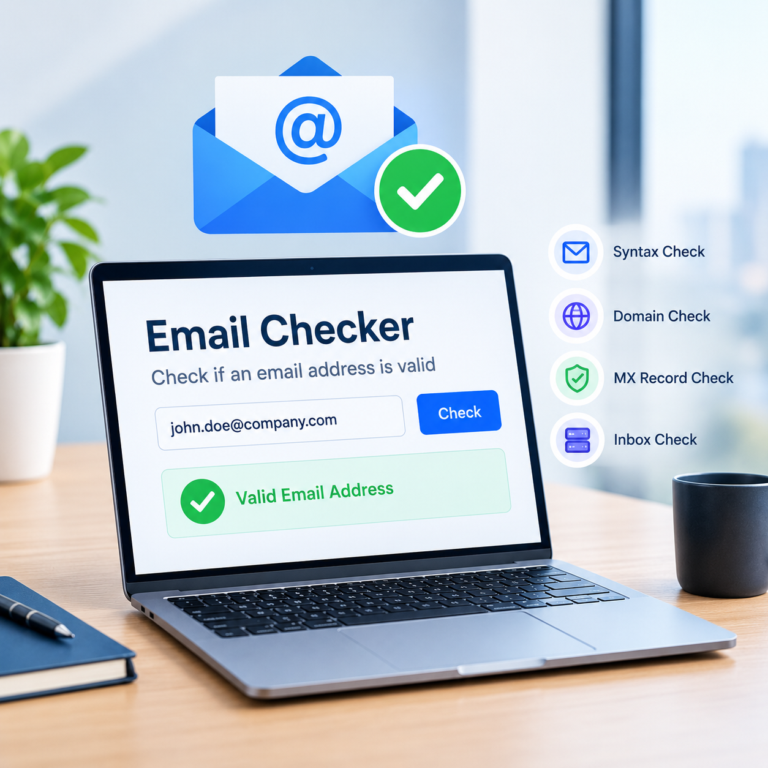
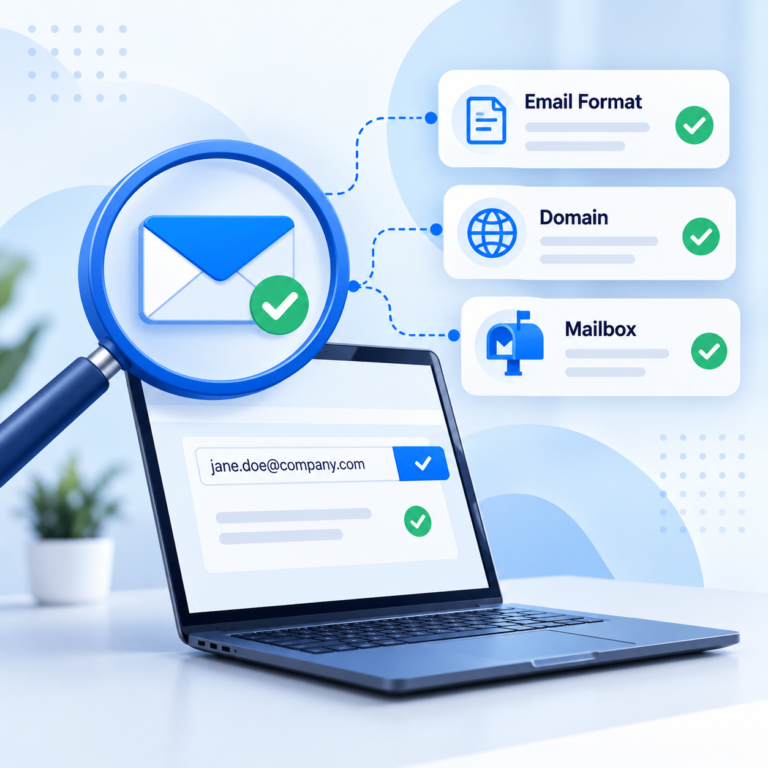
✔ Validate new email addresses
✔ Remove inactive contacts regularly
✔ Segment contacts immediately
✔ Review database quality every quarter
Audience segmentation improves B2B email performance by grouping contacts based on shared characteristics such as industry, company size, buying stage, or engagement history. More relevant communication leads to stronger engagement, healthier sender reputation, and more meaningful customer relationships.

Start with a small number of meaningful segments rather than dozens of highly specific groups. A manageable segmentation strategy is easier to maintain and often delivers better long-term consistency.
Effective B2B email personalization goes beyond adding a recipient’s first name. It uses customer data, buying stage, industry, and behavioral insights to deliver relevant content that helps decision-makers solve problems. Meaningful personalization builds trust, improves engagement, and supports stronger business relationships.
Use this framework before sending every campaign:
Step | Action |
R | Research your audience |
E | Establish a clear objective |
L | Leverage accurate customer data |
E | Engage with valuable content |
V | Validate and test before sending |
A | Automate repetitive tasks |
N | Nurture consistently |
T | Track results and optimize |
Personalize according to business context rather than personal details. A CFO and an IT Director may work at the same company but have different priorities, challenges, and buying criteria.
Marketing automation helps businesses deliver timely, relevant emails based on customer actions and predefined workflows. It increases efficiency by automating repetitive tasks while allowing marketing and sales teams to focus on building stronger customer relationships and improving campaign performance.

Automation should improve customer experience—not increase email volume. Sending more automated emails without improving relevance often leads to lower engagement.
High-performing B2B emails focus on solving customer problems rather than promoting products. Clear subject lines, concise messaging, strong value propositions, and one specific call-to-action encourage recipients to engage and move to the next stage of the buying journey.
✔ Write a clear, benefit-driven subject line
✔ Address one business challenge
✔ Keep paragraphs short
✔ Use one primary call-to-action
✔ End with a natural next step
Example
Instead of:
“Learn about our latest features.”
Write:
“See how manufacturers reduced reporting time with automated workflows.”
The second version immediately communicates value.
Deliverability depends on technical setup, database quality, audience engagement, and responsible sending practices. Even well-written campaigns cannot succeed if emails fail to reach the inbox. Strong authentication, list hygiene, and compliance protect both sender reputation and customer trust.
Businesses should comply with applicable privacy regulations by:
Deliverability is often viewed as a technical challenge, but poor inbox placement usually begins with irrelevant messaging or declining audience engagement rather than technology alone.
Successful B2B email marketing measures business impact rather than vanity metrics. While opens and clicks provide useful signals, organizations should also track conversions, qualified leads, pipeline contribution, customer retention, and revenue influenced by email campaigns.
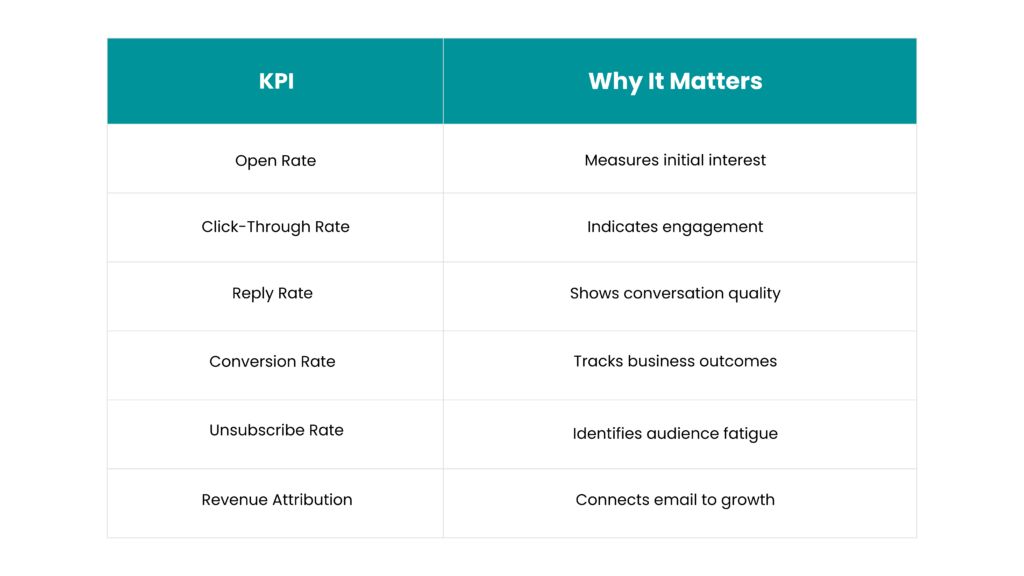
Evaluate your program across these areas:
Review these categories quarterly to identify improvement opportunities.
Many B2B email programs underperform because they prioritize quantity over quality. Common issues include poor segmentation, outdated contact data, weak personalization, inconsistent measurement, and campaigns that focus on selling instead of helping prospects make informed decisions.
Avoid These Mistakes
The future of B2B email marketing combines artificial intelligence, first-party data, predictive analytics, and privacy-first personalization. Businesses that balance automation with authentic customer relationships will be better positioned to adapt to changing buyer expectations and evolving privacy regulations.
Technology will continue to evolve, but trust, relevance, and valuable content will remain the foundation of successful email marketing.
Successful B2B email marketing isn’t about sending more emails, it’s about sending the right message to the right audience at the right time. Organizations that combine accurate data, thoughtful segmentation, meaningful personalization, automation, and continuous optimization create stronger customer relationships and more predictable business growth.
Use this guide as your strategic foundation, then explore specialized topics such as email list hygiene, email validation, inbox placement, spam complaint reduction, CRM integration, compliance, open-rate optimization, and account-based marketing through your supporting cluster articles. Together, they form a complete B2B email marketing ecosystem that strengthens topical authority, improves search visibility, and delivers long-term value to both readers and search engines.
B2B email marketing focuses on educating multiple decision-makers through longer buying cycles, while B2C campaigns typically encourage faster purchasing decisions from individual consumers.
Frequency should reflect audience expectations and content quality. A consistent schedule with relevant information generally performs better than increasing email volume.
Performance varies by industry and audience. Instead of comparing benchmarks alone, monitor trends within your own campaigns and optimize continuously.
Common causes include poor sender reputation, low engagement, outdated email lists, missing authentication records, or content that doesn’t align with subscriber expectations.
Yes. Even simple automated workflows such as welcome emails, lead nurturing, and follow-up sequences can improve efficiency and customer experience.
Marketing professional with a Master’s degree in Marketing, specializing in SEO, content strategy, social media, performance marketing, prospecting, and demand generation.
Access 200M+ verified business emails and grow your sales pipeline effortlessly.
Don't forget to share this post!















Check out our other blogs!
Email ID Checker: Verify Any Email ID Online
ICP Refinement for SDRs: Using Data Filters to Stop Wasting Touches

Email Validator: Validate Email Format, Domain and Mailbox