

How to Evaluate B2B Data Vendors for Accuracy and Compliance
Finding the right tax professionals’ contact lists helps business-to-business teams connect with CPAs, tax consultants, accountants, enrolled agents, payroll advisors, bookkeeping firms, and finance decision makers. These contacts support lead generation, partner programs, sales campaigns, software promotion, and financial service marketing.
A strong contact list should offer more than names and emails. It should include verified business email addresses, phone numbers, job titles, company names, locations, company sizes, industries, seniority levels, and service focus. These details help sales and marketing teams reach the right people with a relevant message.
This blog explains how to effectively find tax professionals’ contact lists from a business-to-business perspective. It also covers data quality, segmentation, verification, compliance, and campaign use.
Business-to-business companies need contact lists for tax professionals because tax experts influence financial and operational decisions. They work closely with business owners, finance teams, payroll teams, and accounting departments. This makes them valuable contacts for software firms, lenders, insurance providers, payroll companies, consulting firms, and financial service brands.
A verified list helps teams avoid broad targeting. For example, an accounting software company may want CPAs. A payroll provider may need tax advisors who support small businesses. A financial service company may want contacts at accounting firms that advise growing companies.
Teams can support better prospecting with a trusted B2B data source and targeted, role-based pages, such as an accountant’s list.
A tax professional’s contact list should include complete business data that supports targeting, qualification, and personalization. Basic email records are not enough for serious business campaigns. Sales and marketing teams need structured fields to better understand each contact and company.
Useful fields include full name, verified email, direct phone number, job title, company name, company website, firm size, location, industry, seniority, LinkedIn profile, revenue range, and service category. These details help teams create sharper segments and better sales messages.
Teams can address missing or incomplete records through data enrichment and learn more about verified records using our data.
The best way to find tax professionals’ contact lists is to start with a clear ideal customer profile. Before collecting contacts, define the exact professionals you want to reach. This may include CPAs, enrolled agents, tax preparers, accounting partners, payroll advisors, tax directors, or finance consultants.
Next, choose data sources that match your goal. B2B databases, CPA directories, LinkedIn, accounting firm websites, business directories, tax events, and finance webinars can help. Each source offers different levels of speed, accuracy, and detail.
Teams that want to test data quality before scaling can use free leads and read more about prospecting through lead generation.
Segmentation helps teams divide a large contact list into focused groups. This improves message relevance because each tax professional has a different role and business need. A CPA firm owner may care about growth. A tax manager may focus on workflow. A payroll advisor may look for client service support.
Good segmentation supports email campaigns, calling, account-based marketing, paid ads, and sales follow-up. It also helps teams compare which audience delivers better replies and conversions.
Teams can study database selection through contact database resources and improve campaign planning with sales guide content.
Data verification confirms whether contact details are accurate, active, and usable. Poor records can lead to high bounce rates, low reply rates, and wasted sales effort. For business-to-business teams, verified data protects campaign performance and supports cleaner CRM reporting.
Verification should include email validation, duplicate removal, company matching, title confirmation, phone checks, and record updates. It also helps teams avoid sending messages to the wrong contacts or inactive accounts.
Teams can compare enrichment options through data tools and review database use cases in enterprise platforms.
Business-to-business teams must use tax professionals’ contact lists with care. Compliance rules vary by region, so teams should review GDPR, CCPA, CAN-SPAM, and other applicable privacy laws before using contact data.
A responsible campaign should include a clear business purpose, accurate sender details, relevant messaging, and an easy opt-out option. Teams should also choose vendors that explain how they collect, verify, update, and manage data.
For added context, teams can review unlimited views and finance-focused content, such as advisor leads.
ReachStream helps business-to-business teams find verified contacts and company data for sales and marketing campaigns. Users can search contacts by job title, industry, location, company size, and other filters.
For tax-related campaigns, teams can use ReachStream to find accounting professionals, finance leaders, CPA firms, payroll contacts, and business service decision makers. The platform also supports enrichment, free lead access, and CRM friendly workflows.
Teams targeting accounting software users can explore the QuickBooks users page. For finance-related targeting, the finance leads page can also support campaign planning.
A tax professional’s contact list works best when teams connect it with a clear campaign plan. The list should match the offer, audience, message, and sales goal. Sending the same message to every contact can reduce engagement.
Start with small segments. Then write messages for each role. Software companies can speak about workflow efficiency. Payroll providers can address client service needs. Financial firms can target advisors who support business owners.
Teams that need sales prospecting ideas can review prospecting tips and support their data process with an email finder.
Businesses should avoid buying tax professionals’ contact lists from vendors that do not explain their data sources, verification processes, update cycles, or compliance approaches. A low-cost list may look attractive, but poor records can damage campaign results.
Teams should also avoid broad finance lists when they need tax-specific contacts. A CPA, accountant, tax preparer, finance director, and payroll advisor may have different responsibilities. Campaigns perform better when the audience matches the offer.
A careful review before purchase helps teams protect budget, sales time, and brand trust.
Tax professionals’ contact lists can help business-to-business companies reach CPAs, accountants, tax consultants, enrolled agents, payroll advisors, and finance decision-makers with greater focus. The best results come from accurate data, clear segmentation, verified records, and a strong campaign plan.
Before choosing a list, define your target audience, review data fields, check verification standards, confirm compliance practices, and test contact quality. A well-built list can support email campaigns, sales calls, partner programs, account-based marketing, and long-term pipeline growth.
For teams that need verified contact data, ReachStream can support list building, enrichment, and lead generation through business contacts and useful prospecting resources.
A tax professional’s contact list is a database of CPAs, accountants, tax consultants, tax managers, enrolled agents, and related finance professionals. It usually includes business emails, phone numbers, job titles, company names, and locations.
Software companies, payroll providers, lenders, insurance firms, financial advisors, recruitment agencies, consulting firms, and business-to-business marketing teams can use these lists to reach tax and accounting decision-makers.
Start with a clear ideal customer profile. Then use verified B2B databases, CPA directories, accounting firm websites, LinkedIn, business directories, and enrichment tools to collect and confirm contact details.
Check email accuracy, data fields, update cycle, source quality, segmentation options, compliance standards, duplicate removal, and CRM compatibility before buying the list.
Segment contacts by role, location, company size, service type, and seniority. Write role-specific messages, validate email addresses, track engagement, and refresh records after each campaign.
Marketing professional with a Master’s degree in Marketing, specializing in SEO, content strategy, social media, performance marketing, prospecting, and demand generation.
Access 200M+ verified business emails and grow your sales pipeline effortlessly.
Don't forget to share this post!















Check out our other blogs!
What Is B2B Data and Why It Matters for Modern Sales Teams
A Buyer’s Checklist for Evaluating B2B Data Providers
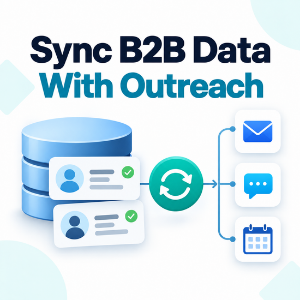
How to Sync B2B Data with Your Outreach Sequences