


How to Evaluate B2B Data Vendors for Accuracy and Compliance
Most startups burn through their outreach budget chasing leads that were never going to convert. The problem isn’t effort—it’s targeting.
An ABM list builder changes that equation by helping you identify and prioritize the specific accounts most likely to buy. This guide walks you through how to build your first ABM target account list, what to look for in a free tool, and which platforms work best for startups and solo professionals.
For startups, an effective ABM list builder combines firmographic data—company size, industry, revenue—with high-intent signals like recent funding rounds or tech stack changes. The goal here is quality over volume: a curated list of accounts that actually fit your Ideal Customer Profile (ICP) for maximum ROI.
So what exactly is account-based marketing? ABM is a B2B strategy where you target specific high-value companies rather than casting a wide net and hoping for the best. An ABM list builder is the tool that helps you find, organize, and prioritize those target accounts using company and contact data.
Think of it as your prospecting command center. You define the types of companies you want to reach, and the list builder surfaces verified contacts at those accounts. From there, you can run personalized outreach instead of generic campaigns.
When you’re working with limited time and budget, every outreach touchpoint counts. You can’t afford to chase hundreds of unqualified leads and hope something sticks.
ABM flips the traditional funnel on its head. Instead of attracting thousands of leads and filtering down, you start with a focused list of best-fit accounts and work to engage them directly. This approach tends to produce shorter sales cycles because you’re reaching decision-makers from the start.
Here’s what that looks like in practice:
You might be wondering: can a free tool actually deliver results? The short answer is yes—especially when you’re still validating your ICP or running your first ABM campaigns.
A free ABM list builder lets you test your strategy without budget risk. You can access verified B2B contact data, reduce bounced emails, and build segmented lists from one platform. Once you’ve proven the approach works, scaling into paid tiers becomes a lot easier to justify.
Before you open any tool, get clear on your approach. Are you going after a handful of high-value accounts with fully personalized 1:1 outreach? Or are you targeting a broader segment with 1:few or 1:many campaigns?
For most startups, 1:few or 1:many is the practical starting point. You probably don’t have the bandwidth for hyper-personalized campaigns to hundreds of accounts—at least not yet. And that’s perfectly fine.
Your ICP describes the type of company most likely to buy and succeed with your product. If you have existing customers, look at your best ones and identify what they have in common. If you’re pre-revenue, lean on market research.
The more specific you get here, the easier everything else becomes.
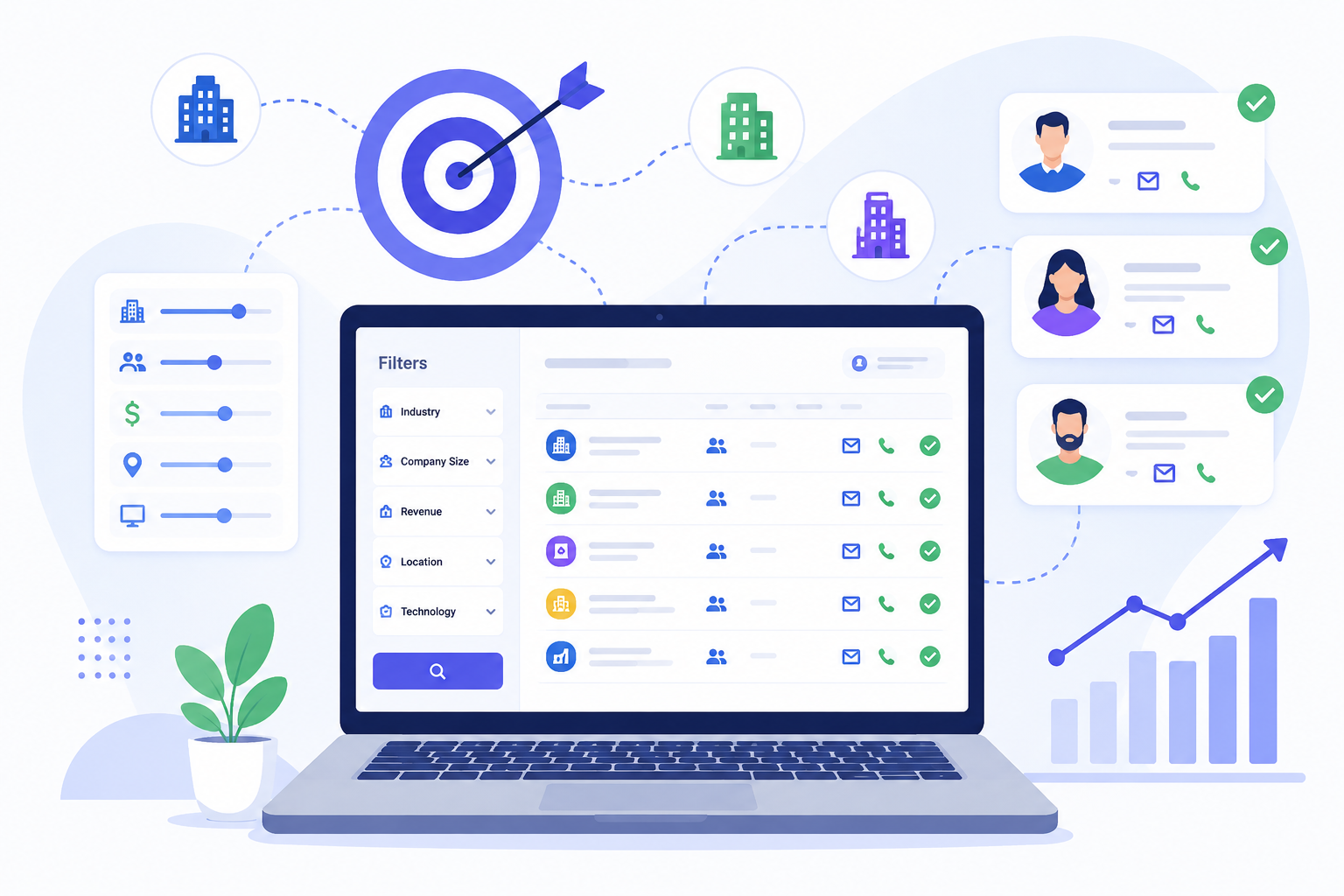
Now you’re ready to search. Use firmographic filters—industry, company size, revenue, location—to narrow your list. Then layer in technographic filters to find companies using tools that signal compatibility or replacement opportunities.
This is where a platform with 20+ advanced filters becomes valuable. The more precisely you can match your ICP, the less time you’ll spend disqualifying poor-fit accounts later.
A list of companies isn’t enough on its own. You also want verified emails and direct phone numbers for decision-makers at those accounts.
Prioritize tools with real-time verification to reduce bounce rates and protect your sender reputation. ReachStream, for example, uses a 7-step AI + manual verification process and refreshes data every 45 days. That kind of ongoing maintenance matters because B2B contact data decays quickly.
Not every account deserves the same level of attention. Grouping your list by priority helps you allocate effort where it’ll have the biggest impact.
Keep Tier 1 small—typically 50 accounts or fewer for early-stage startups. You want to be able to give those accounts real attention.
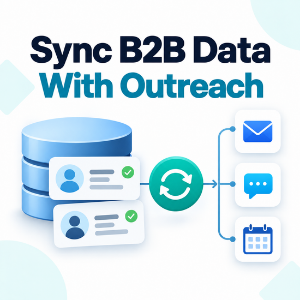
Your ABM list is only useful if it flows into your actual workflow. Connect it to your CRM (HubSpot, Salesforce, Pipedrive) and sales engagement tools so your team can follow up efficiently.
Look for platforms with native CRM integrations and API access. This reduces manual data entry and keeps records current as contacts change roles or companies.
B2B data decays fast. People change jobs, companies get acquired, email addresses go stale. A tool with real-time email verification and regular refresh cycles helps you avoid bounced emails and wasted outreach.
Granular filters let you match your ICP precisely. Look for options like job title, seniority, department, company size, revenue, location, and technographics. The more filters available, the tighter your targeting can be.
Evaluate what the free tier actually includes: credit limits, export limits, feature access. Then check whether paid plans scale affordably as your pipeline grows. Some tools offer generous free tiers but jump to enterprise pricing quickly.
Manual data entry kills momentum. Prioritize tools that connect to your existing sales stack and keep records synced automatically. This is especially important if you’re a solo professional juggling multiple tools.
Make sure the tool supports GDPR, CCPA, and other relevant regulations. Compliance protects you from legal risk and builds trust with prospects who care about how their data is handled.
ReachStream offers 200M+ contacts, 20+ filters, real-time verification, a Chrome extension for LinkedIn prospecting, and CRM integrations—all with a free tier to get started. It’s built for startups that want accurate, outreach-ready data without enterprise pricing.
A popular all-in-one platform with a generous free tier, strong sequence features, and CRM integration. Data accuracy can vary at scale, but it’s a solid starting point for teams exploring ABM.
Simple and focused on email finding and verification. Works well for solo professionals using domain-based searches, though it offers less firmographic filtering than full ABM platforms
A strong option for teams prioritizing verified contacts and technographic filters. The free tier is limited in credits, but data quality is generally high.
Budget-friendly with email finder, verifier, and drip campaign features. Suits early-stage startups running lean outbound programs.
Useful for quick LinkedIn prospecting with a browser extension and contact enrichment. The free tier is limited, and pricing can become expensive at scale.
Your first list won’t be perfect—and that’s completely normal. Refinement is part of the process.
Start by reviewing your conversion data. Which account attributes correlate with closed deals? Which ones don’t? Use that information to trim accounts that no longer match your updated ICP.
Then, re-enrich your data regularly. People change jobs, companies grow or shrink, and contact details go stale. Finally, look for lookalike accounts—companies that resemble your best customers but aren’t on your list yet.
Targeting too many accounts dilutes personalization and wastes outreach effort. A list of 500 random companies is less valuable than 50 high-fit accounts you can actually engage meaningfully.
Unverified emails increase bounce rates, damage sender reputation, and waste your sequences. Always verify before outreach—it takes seconds and saves hours of cleanup later.
Use job title, department, and seniority filters to target actual buyers. Reaching the wrong contact at the right company still means no deal.
B2B contacts change roles constantly. Refresh your data regularly to keep your list effective over time. A stale list is almost as bad as no list at all.
ReachStream’s ReachAPI combines verified data, flexible endpoints (enrichment, counts, predefined values), and CRM connectivity—all with built-in compliance. Whether you’re a solopreneur testing outbound or an enterprise team scaling pipeline, the platform adapts to your workflow.
Yes. Solo founders and small marketing teams can run ABM by using a list builder to identify target accounts and automate personalized outreach through email sequences and CRM workflows. You don’t need a dedicated sales team to get started.
Most startups begin with 50 to 200 accounts across Tier 1 and Tier 2. This allows for personalized outreach without overwhelming limited resources. You can always expand later once you’ve validated your approach.
An ABM list targets specific companies matching your ICP. A lead list usually contains individual contacts gathered through broader inbound or outbound methods—often without the same level of account-level targeting.
Yes. ABM concentrates limited resources on high-fit accounts, which often leads to faster deal cycles and higher conversion rates. That focus is exactly what early-stage teams with tight budgets benefit from most.
Marketing professional with a Master’s degree in Marketing, specializing in SEO, content strategy, social media, performance marketing, prospecting, and demand generation.
Access 200M+ verified business emails and grow your sales pipeline effortlessly.
Don't forget to share this post!















Check out our other blogs!
What Is B2B Data and Why It Matters for Modern Sales Teams
A Buyer’s Checklist for Evaluating B2B Data Providers
How to Sync B2B Data with Your Outreach Sequences