
Unlimited Data.
Infinite Possibilities.
Looking for B2B data? Download Unlimited data using our Chrome extension at just $79/month.
How to Choose a B2B Data Platform for Sales Intel

How to Choose a B2B Data Platform for Sales Intel

How to Evaluate B2B Data Vendors for Accuracy and Compliance

Most sales teams don’t struggle because of a lack of effort—they struggle because they’re working with the wrong data.

For mid-market teams especially, finding the right prospects, getting accurate contact details, and keeping CRM data up to date can quickly become overwhelming. That’s where B2B data platforms come in. They promise to simplify sales intelligence, improve targeting, and help teams build a stronger pipeline.

But here’s the catch: almost every platform claims to have the “best data” and “highest accuracy.” In reality, many fall short when it comes to consistency, integrations, or scaling with your business. As a result, teams often end up wasting time on poor-quality data, chasing the wrong leads, or dealing with disconnected systems.  

Choosing the right platform isn’t just about features—it’s about finding a solution that actually supports how your team works and helps you generate real revenue. 

The reality is simple: 

Your sales outcomes are only as good as the data behind them. 

This guide is designed to help mid-market sales and revenue operations leaders cut through the noise. It provides a structured, practical framework to evaluate and select the right B2B data platform, ensuring your investment directly impacts pipeline growth, conversion rates, and overall sales efficiency. 

Why B2B Data Platforms Are Critical for Sales Intelligence

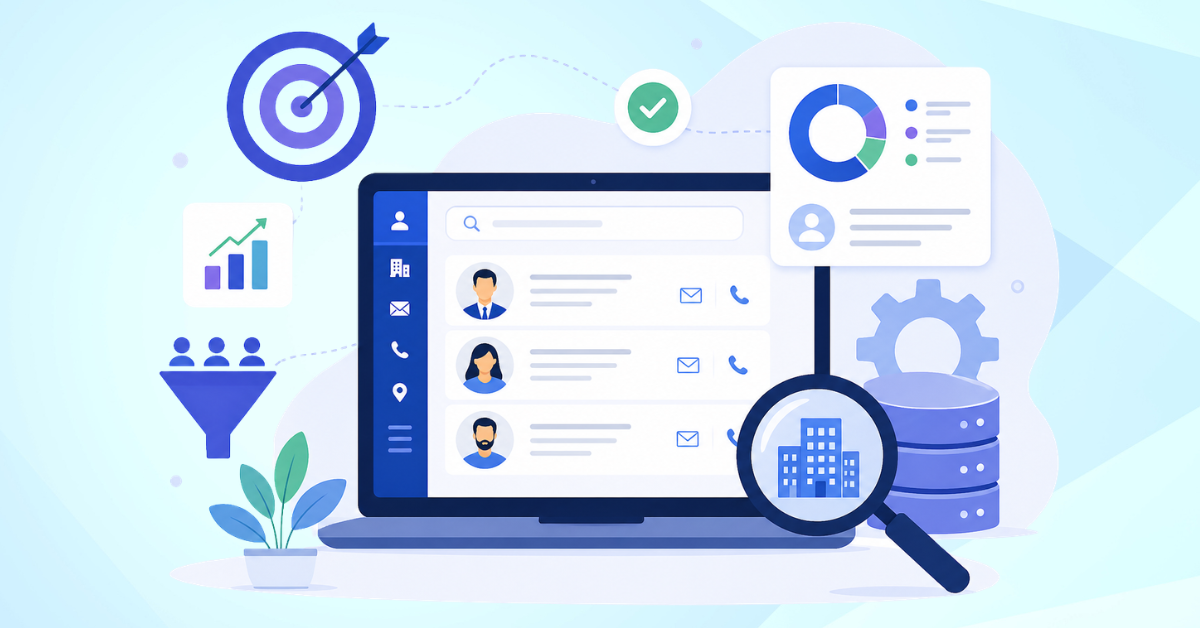
Modern sales intelligence goes far beyond static contact lists. Today’s high-performing teams rely on dynamic, continuously updated B2B contact and company data to: 

  • Identify high-value prospects faster. 
  • Personalize outreach at scale 
  • Improve lead qualification and routing. 
  • Reduce time spent on manual research. 
  • Increase conversion rates across the funnel. 


For mid-market companies, this is even more important. Unlike large enterprises, you don’t have the luxury of large SDR teams or unlimited budgets. Every outreach effort needs to be targeted, relevant, and timely.
 

This is where the right prospecting tools make a measurable difference—by enabling teams to focus on the right accounts instead of wasting time on outdated or irrelevant data. 

Step 1: Define Your Sales Intelligence Requirements

Before evaluating platforms, you need clarity on your internal requirements. Without this, even the best tool will fall short. 

Start with your Ideal Customer Profile (ICP)

Define: 

  • Company size (employee count, revenue) 
  • Geographic focus 
  • Technology usage (if relevant) 


For example:
 

  • A mid-market SaaS company may target tech-enabled businesses with 50–500 employees 
  • A consulting firm may focus on enterprise clients across multiple regions 

Identify Your Data Needs

Ask yourself: 

  • How important is direct contact data (emails, phone numbers)? 
  • Do you require technographics or intent data? 
  • How frequently will you need lead enrichment? 

Map Your Workflow

Understand how data will flow within your organization: 

  • Will SDRs use it daily for outbound prospecting? 
  • Will marketing use it for campaign targeting? 
  • Will RevOps use it for database enrichment and cleaning? 


Having clarity here ensures you choose a platform aligned with actual business needs—not just feature lists.
 

Step 2: Prioritize Data Quality Above Everything

If there’s one factor you should never compromise on, it’s data quality. 

Poor data leads to: 

  • High bounce rates 
  • Low engagement 
  • Damaged sender reputation 
  • Wasted sales effort 

Key Data Quality Indicators

Accuracy & Verification

Look for platforms that:

  • Validate email addresses and phone numbers 
  • Use multiple verification layers 
  • Provide confidence scores or accuracy indicators

Data Freshness

Choose platforms that: 

  • Outdated data is as bad as incorrect data.
  • Continuously update records 
  • Refresh data in real-time or near real-time

Coverage & Depth

A strong platform should offer:

  • Firmographic data (industry, size, revenue) 
  • Contact-level insights (job title, seniority) 
  • Optional technographic or intent signals

Global Reach

If your businessoperates across regions, ensure the platform supports global B2B contact and company data coverage.

Platforms like ReachStream emphasize high data accuracy and frequent updates, making them particularly effective for teams that rely heavily on outbound prospecting and enrichment workflows. 

Step 3: Evaluate Core Features and Capabilities

Once data quality is validated, move on to platform functionality. 

Advanced Search & Segmentation

The ability to precisely define your audience is crucial. 

Look for: 

  • Multi-layer filtering (industry, location, revenue, job role) 
  • Boolean search capabilities 
  • Saved searches and list-building features 

This directly impacts how effectively your team can target prospects. 

Lead Enrichment Capabilities

Lead enrichment is essential for maintaining a clean and actionable database. 

A strong platform should allow you to: 

  • Upload existing contact lists 
  • Fill missing data fields 
  • Update outdated records 
  • Standardize data formats 


This ensures your CRM remains a reliable source of truth.
 

Bulk Data Access & Export

Mid-market teams often need to work at scale. 

Ensure the platform supports: 

  • Bulk downloads 
  • Large dataset exports 
  • API access for automation 

CRM and Tool Integrations

Your data platform should fit seamlessly into your existing tech stack. 

Key integrations include: 

  • CRM systems (e.g., Salesforce, HubSpot) 
  • Marketing automation tools 
  • Outreach platforms 


Weak or limited integrations can leave your data scattered across tools, making workflows slower and less efficient.
 

User Experience (UX)

Even the most powerful tool is useless if your team doesn’t use it. 

Evaluate: 

  • Interface simplicity 
  • Speed of search and export 
  • Ease of onboarding 


ReachStream, for example, focuses on usability alongside functionality—making it easier for teams to adopt and use consistently.
 

Step 4: Consider Compliance and Data Privacy

With increasing regulations like GDPR and other global data privacy laws, compliance is no longer optional. 

What to look for:

  • Transparent data sourcing practices 
  • Compliance with international regulations 
  • Built-in suppression and opt-out mechanisms 
  • Clear data usage policies 


Using non-compliant data can result in legal risks and reputational damage—especially for growing mid-market companies.
 

Step 5: Analyze Pricing Models Carefully

Pricing can vary significantly across B2B data platforms, so it’s important to evaluate beyond surface-level costs. 

Common Pricing Models:

  • Credit-based systems 
  • Subscription plans 
  • Pay-per-contact pricing 

How to Evaluate Value:

Instead of asking “How much does it cost?”, ask: 

  • What is the cost per usable contact? 
  • How accurate is the data? 
  • Are enrichment and exports included? 
  • Are there hidden costs for integrations or API usage? 


A lower-cost platform with poor data quality often results in higher long-term costs due to inefficiencies and lost opportunities.
 

Step 6: Run a Real-World Pilot

Never rely solely on demos or sales pitches. 

Test the platform using your actual workflow:

  • Build a list based on your ICP 
  • Export data and run outreach campaigns 
  • Measure: 
  • Bounce rates 
  • Open rates 
  • Reply rates 
  • Test enrichment accuracy
 

This hands-on evaluation reveals the platform’s true effectiveness. 

Strong platforms will show immediate improvements in: 

  • Deliverability 
  • Engagement 
  • Pipeline quality 

Step 7: Evaluate Scalability for Future Growth

Your business will evolve—and your data needs will grow with it. 

Choose a platform that can scale with: 

  • Increasing data volumes 
  • Expanding geographic markets 
  • Larger sales teams 
  • More complex workflows
     

Mid-market companies often outgrow entry-level tools quickly, leading to costly migrations. Investing in a scalable solution early saves time and resources. 

Step 8: Assess Vendor Support and Reliability

A commonly overlooked factor is vendor support. 

Evaluate:

  • Onboarding assistance 
  • Customer support responsiveness 
  • Availability of training resources 
  • Product updates and roadmap 


A reliable vendor acts as a partner, not just a provider.
 

Practical Selection Checklist

Use this checklist when comparing prospecting tools: 

✔ High data accuracy and verification standards 
✔ Frequent data updates and freshness 
✔ Strong B2B contact and company data coverage 
✔ Advanced filtering and segmentation capabilities 
✔ Reliable lead enrichment features 
✔ Seamless CRM and tool integrations 
✔ Compliance with global data regulations 
✔ Transparent and scalable pricing 
✔ Proven performance in real-world use cases 
✔ Strong customer support and onboarding 

Why ReachStream Is a Strong Choice for Mid-Market Teams

While many B2B data platforms focus either on small businesses or large enterprises, ReachStream is well-positioned for mid-market organizations. 

Key Advantages:

High-Quality Data: ReachStream offers verified and frequently updated B2B contact and company data, ensuring reliable outreach.

Powerful Filtering: Its advanced search capabilities allow teams to precisely target ideal prospects.

Efficient Lead Enrichment: Bulk enrichment features help maintain a clean and complete CRM database.

User-Friendly Interface: Designed for ease of use, enabling faster adoption across teams.

Scalable for Growth: Flexible enough to support expanding teams and evolving data needs.

Most importantly, ReachStream focuses on delivering actionable sales intelligence, helping teams move quickly from data discovery to pipeline generation. 

Common Mistakes to Avoid When Choosing a B2B Data Platform

Even experienced teams can make mistakes during the selection process. 

Avoid these pitfalls:

Final Thoughts

Selecting the right B2B data platform is one of the most impactful decisions for your sales organization. 

For mid-market sales teams, the goal is clear: 

  • Access accurate and up-to-date data 
  • Target the right prospects 
  • Improve efficiency and conversion rates
 

By focusing on data quality, platform capabilities, compliance, and real-world performance, you can confidently choose a solution that strengthens your sales intelligence strategy. 

Platforms like ReachStream demonstrate how the right combination of accuracy, usability, and scalability can directly influence pipeline growth and revenue outcomes. 

In the end, the best platform isn’t the one with the most features—it’s the one that helps your team sell smarter, faster, and more effectively. 

Reach more with ReachStream!

Frequently asked questions

1. What is a B2B data platform for sales intelligence?

A B2B data platform for sales intelligence is a software solution that provides verified contact and company data to help sales teams identify, target, and engage ideal prospects. It improves prospecting efficiency, personalization, and pipeline generation by offering accurate firmographic and contact-level insights. 

A B2B data platform improves sales performance by giving teams access to accurate prospect data, reducing manual research, and enabling better targeting. With clean B2B contact and company data, sales reps can increase outreach efficiency, boost engagement rates, and improve overall conversion across the funnel. 

Mid-market companies should prioritize data accuracy, advanced filtering, CRM integration, lead enrichment capabilities, and scalable pricing. The right B2B data platform should align with their sales workflow and support consistent pipeline growth without requiring large SDR teams or complex technical setup. 

Data accuracy is critical because inaccurate B2B contact data leads to high bounce rates, poor deliverability, and wasted outreach efforts. Reliable data ensures better engagement, protects sender reputation, and helps sales teams focus on qualified prospects instead of chasing outdated leads. 

Lead enrichment enhances CRM performance by filling in missing data fields, updating outdated records, and standardizing company information. This ensures your CRM remains accurate and actionable, allowing sales and marketing teams to improve segmentation, targeting, and personalized outreach strategies. 

Contact data includes individual-level details such as name, job title, email address, and phone number. Company data, also known as firmographic data, includes business-level information like industry, employee size, revenue, and geographic location used for account-based targeting. 

CRM integrations allow B2B data platforms to sync contact and company data directly into systems like Salesforce or HubSpot. This reduces manual data entry, prevents duplication, and ensures sales teams always work with updated information inside their existing workflow. 

Segmentation enables sales teams to filter prospects by industry, location, company size, revenue, or job role. Advanced segmentation within a B2B data platform helps teams focus on high-fit accounts, personalize outreach, and improve response rates. 

Businesses should run a pilot campaign using their Ideal Customer Profile to test bounce rates, reply rates, enrichment accuracy, and integration performance. Real-world testing provides better insight than product demos and ensures the platform delivers measurable sales results. 

Yes, compliance is essential. A reliable B2B data platform should follow GDPR and other global privacy regulations, provide transparent data sourcing practices, and offer opt-out mechanisms. Compliance protects businesses from legal risks and strengthens brand credibility. 

N S Samartha

Marketing professional with a Master’s degree in Marketing, specializing in SEO, content strategy, social media, performance marketing, prospecting, and demand generation.

Share
Table of Contents

Access 200M+ verified business emails and grow your sales pipeline effortlessly.

Power Your Sales with Targeted Data

Don't forget to share this post!

Check out our other blogs!